

Author: Sophie Berrill
The Central Land Council is calling on the Northern Territory Government to withdraw the Environment and Water Legislation Amendment Bill 2026. This bill sells out Territorians by stripping away the last remaining protections we have around the industrial use of precious water.
“The bill paves the way for the government to rush through water licences without guardrails for good decision-making and public accountability,” CLC chief executive Les Turner said.

The bill removes community consultation safeguards and instead places all key water planning decisions solely in the hands of the minister. Under the bill, the public and stakeholders will no longer be engaged in planning through water advisory committees unless the Minister decides they’re warranted.
Water allocation plans, which previously lasted a maximum of 10 years before requiring review, will now remain in force until the minister revokes them. This removes the last legally secured, regular opportunity for water plans to be updated according to changing environmental conditions, scientific evidence and community priorities. It means weak or dangerous water plans are locked in indefinitely.
Water management decisions won’t need to align with water allocation plans, rendering the plans meaningless and undermining National Water Initiative requirements for water allocation plans to have a statutory basis. The amendments flout best practice and community aspirations for more transparent water planning laws.
The bill flies in the face of National Water Initiative commitments to secure water for the environment and public benefit, completely tipping an already unbalanced scale towards industry interests.
“The CLC is deeply concerned that we have lost our last line of defence against high-water-consuming projects that might come our way,” Mr Turner said. “With weakened laws and free water, the NT is a honey pot for industrial-scale use of precious and finite groundwater. It is shocking that the bill has not been referred to the legislative scrutiny committee before it is due to be debated on 24 November 2026. This must be rectified.”
In August, the High Court quashed the NT Government’s decision to grant the 40-billion-litre Singleton Station water licence, citing it had been unlawfully granted. This was a licence with potentially devastating impacts on groundwater and the environment and culture that depend on it.
Due to changes the NT Government has made about who is in control of water planning decisions, the law would not support native title holders to challenge the merits of such a licence today.
This is especially troubling when we are already facing proposals for future developments like data centres looking to take advantage of the NT’s lax regulations and free water.
“The NT Government was already backsliding against national best practice for water management. Now it’s over the cliff. It’s clearer than ever that the Federal Government needs to step in by strengthening the water trigger under federal environment laws,” Mr Turner said.
The reforms also make concerning amendments to the Environmental Protection Act, allowing mining companies to reclaim their security deposits before they have remediated their mine sites. This removes an incentive for mining companies to properly fix their sites once work is finished, leaving country at risk, and increasing the cost for Territorians to address the damage of legacy mines.
The CLC is calling on the Federal Government to strengthen the existing water trigger under the Environment Protection and Biodiversity Conservation Act to cover all projects with potentially significant impacts on water and dependent ecosystems. This means the Federal Government can step in to protect Territorians when the NT Government makes decisions that put our water and our environment at risk.
Every politician says they are worried about Australians doing it tough. This week decision makers in Canberra are finding out from representatives of the Central Land Council (CLC) just how tough things are for Aboriginal people and why the poor pay more for where they live.
Council members Roxanne Kenny and Maryanne Malbunka, joined by CLC general manager Dr Josie Douglas, have flown to Canberra to explain to members of parliament how their families are struggling to survive amid soaring prices for fuel and household goods. How they can no longer afford to drive hundreds of kilometres to town to find cheaper options and shop around to make ends meet.
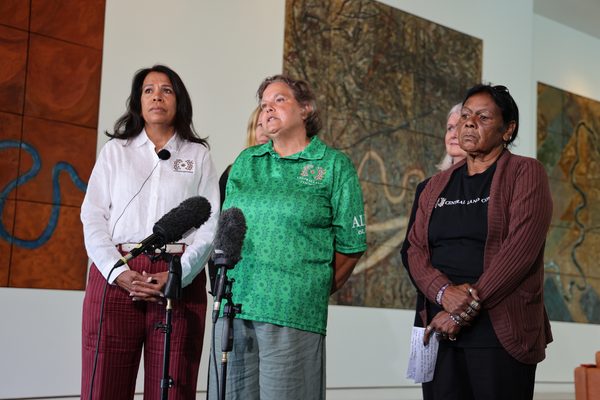
The already high costs of the basics are worsening. In remote communities, living costs are 40 per cent more than in the nearest town. Kids are going hungry. People can’t afford to keep their power on over long hot desert summers. Conditions are dangerous for the elderly, babies and infants and make food storage and cooling almost impossible.
It doesn’t have to be this way. There is a solution.
CLC members believe substantially lifting the remote area allowance for the first time in more than 25 years will make a difference to their families. They have been calling for this for a long time, but their voices go unheard.
The Hawke government brought in the allowance in 1984 to help compensate for the higher living costs out bush – $7 a week back when a litre of fuel cost 50 cents and a litre of milk 70 cents. Today it pays $9.10 a week, at a time when diesel costs up to $4 a litre in some communities.
The Australian Council of Social Services and the Economic Justice Alliance are two of 30 organisations from across the country backing the call to lift the allowance to $121.30 a week. They will join the CLC for a press conference during Anti-Poverty Week.
PRESS CONFERENCE, PARLIAMENT HOUSE, MURAL HALL
THURSDAY 15 OCTOBER 2026, 10 AM
Quote attributable to Roxanne Kenny: Our people are suffering. Fuel can be up to $4 or more and the community shops are so dear. You walk in with a $100 you come out with just one plastic bag. The Remote Area Allowance is basically lolly money, enough for bubble gum. On school holidays I have about 20 people in my three-bedroom house to feed.
Quote attributable to Maryanne Malbunka: I really worry about families on income support. Just one day after payday – by the time they’ve paid for groceries at our expensive local shop, their rent, their phone, fuel or the Bush Bus – they’re broke and have to borrow from other family or go hungry. They can only afford pre-paid electricity for the first four days of the fortnight and get into big debt to keep the power on. My partner and I have full-time jobs and struggle to also support family on income support.
Quote attributable to Dr Josie Douglas: Raising the remote area allowance is one compassionate and practical thing politicians can do right now to relieve the extreme cost of living crisis faced by the poorest Australians out bush. The allowance clearly hasn’t kept up with the skyrocketing prices in remote communities for a long time, but people are now at breaking point. We implore anyone who believes in a fair go to support a meaningful increase.

Amoonguna residents and the Central Land Council will mark half a century of the Aboriginal Land Rights Act (1976) with a community celebration.
The event on Friday, 18 September, honours the significant place the community’s hall holds in land rights history.
The celebration will kick off at the hall at 11:30, with ceremonial performances by local men, women and children, a short video of a 1977 CLC meeting in the hall and the unveiling of an interpretive sign.
It will conclude with a community BBQ and a birthday cake for the historic hall.
“The Amoonguna hall holds a very special place in the hearts of our people,” CLC chair Warren Williams said.
“Our old people held some of the earliest CLC meetings there between 1975 and 1977 and made land rights history. It’s where they elected Arrernte leader Wenten Rubuntja as their chair.
“The event will honour these past leaders and all they have achieved: to claim back more than half of the Territory for its rightful owners, to help families return to their country and protect their sacred sites, to speak up strongly for the people who elect the land council members and to shield them from government policies that would harm them.”
“We want all Amoonguna residents, especially their young people, to share this proud history.”
The community celebration complements and follows another event marking this year’s 50th land rights anniversary – the fourth Vincent Lingiari Art Award at the Araluen Art Centre in Mparntwe (Alice Springs).
The award exhibition runs until 18 October.
16 September 2026
Elizabeth Ngwarraye Bonney of Artists of Ampilatwatja has won the prestigious $10,000 Vincent Lingiari Art Award celebrating the 50th anniversary of the Aboriginal Land Rights Act for her painting My grandmother’s country.
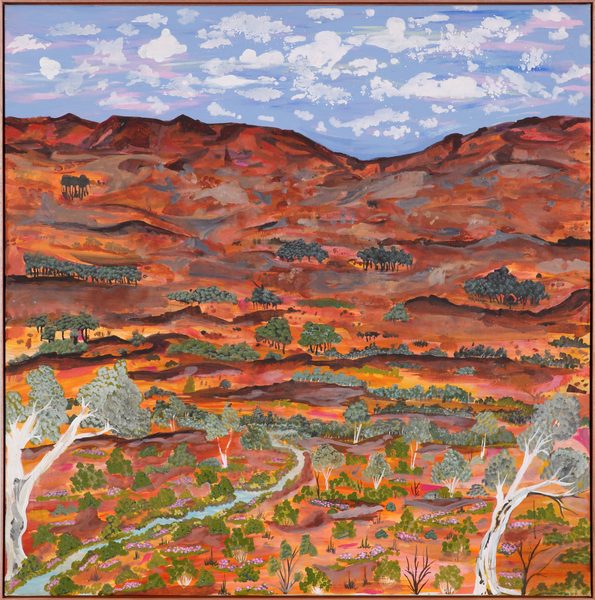
For many years the traditional healer painted together with her mother Eileen Bonney, one of the founders of Artists of Ampilatwatja and the last of the original claimants of the Wakaya Alyawarre land claim that was handed back only last year.
“My mother has been fighting for this land for 40 years, one of the longest standing land claims in the Northern Territory, and now she is passing it over. So we can pass it over to our children,” Ms Bonney said.
“My mother had to fight because this was her mother’s country. My great-great grandfather’s country is Arlenkw,” she said. “My grandfather’s mother’s country is Titjambera. My great grandmother’s country is Arene.”
The winning landscape painting depicts country approximately 325 kilometres northeast of Mparntwe (Alice Springs) that holds stories and memories for the artist.
“When I was young I would go to this country with my mother. I take my daughter and grandchildren to this country. This land holds stories and when we are there, we feel them.”
“I paint to keep my country alive, so we can know and teach our young ones, our grandchildren.”
This is the fourth time the Central Land Council and Desart have joined forces to present the award and the first time two judges chose the winner among a record 56 entries.
Museum and Art Galleries of the Northern Territory curator Rebekah Raymond and the Strehlow Research Centre’s Joel Liddle had the tough task of deciding which entry best responds to this year’s theme Our country, our culture: 50 years of land rights.
“We chose the winning work because it so beautifully reflects a deep connection to country, a connection that is timeless and ever present,” the judges said.
“We talked about how it felt like we could walk right into the artwork; the artist made it feel so true and that we could be there standing with them in their beautiful desert country.”
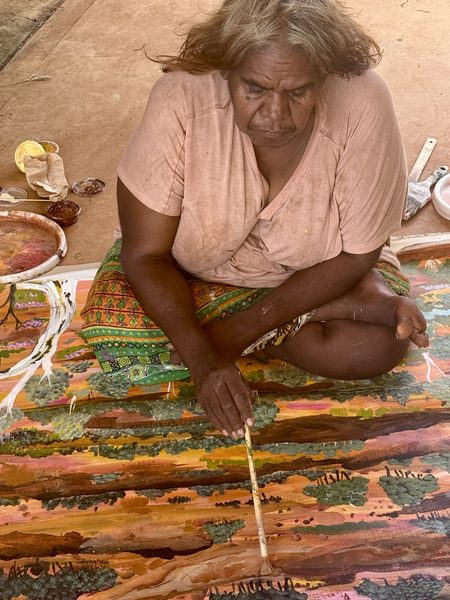
“We were also moved by the story shared by the artist of how the fight for their land was intergenerational. The artist honoured their elders – their grandmother and their mother who began the fight for their lands, which took 40 long years to succeed. This long-held fight for land, for culture, for our families is one that so many of us know, and so many are still fighting.”
“The work we chose is stunning and has depth, and for us is an important work to celebrate this year.”
Vincent Lingiari’s granddaughter Rosie Smiler travelled to today’s opening of the Desert Mob event to announce the award winner.
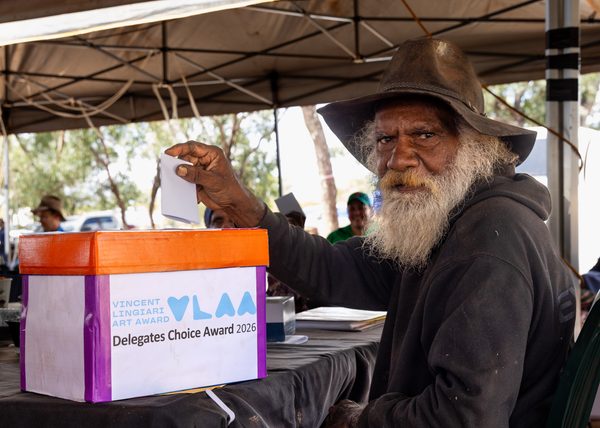
Last month she joined the elected members of the Central Land Council at Kalkaringi as they voted for the $2,000 CLC Delegates Choice Award.
The delegates chose Three Brothers by Tennant Creek’s Joseph Williams Jungarrayi, a cultural leader and Warumungu translator who works for the Nyinkka Nyunyu Art and Culture Centre.
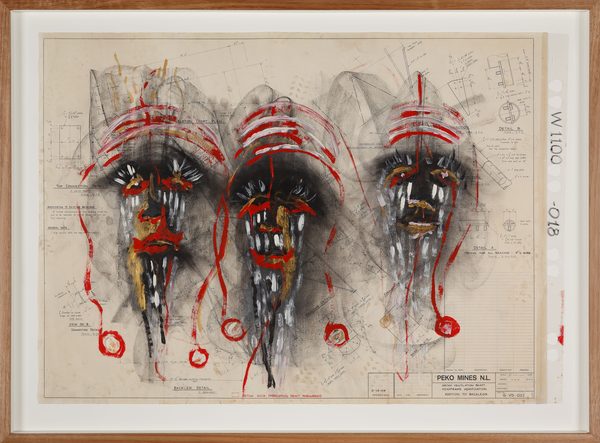
Mr Williams calls his winning work “a reflection on country, memory and ancestral presence, expressed through the surface of a colonial mine map”.
“By working directly onto this map, I reclaim it, transforming a document that once marked extraction and disruption into one that carries culture, story and identity,” he said.
“Fifty years on from land rights, this work speaks to reclamation – of land, of narrative and of identity. It honours the enduring presence of ancestors and recognises that our stories are still embedded in country, no matter how it has been mapped, divided or used.”
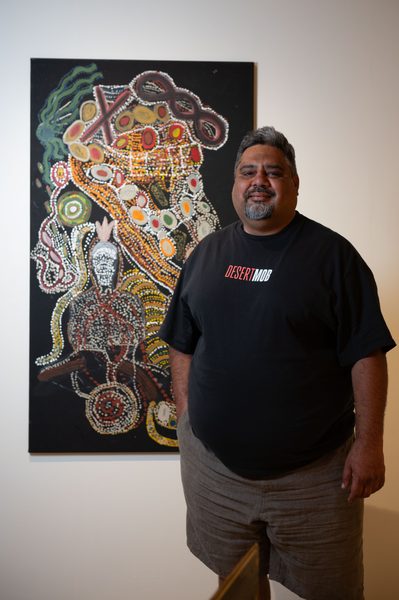
CLC chair Warren Williams congratulated the winners and thanked all the artists from across Central Australia and beyond who entered works.
“Our land rights and our art movements have challenged and changed this country for the better. Your art lifts us up and inspires us to keep fighting for our families. We hope it will reach those in power who might otherwise be out of reach,” he said.
Desart chief executive Philip Watkins said:
“Desart warmly congratulates the winners. Elizabeth’s work reflects an unbroken relationship with country that stretches back countless generations. It embodies the profound responsibility, belonging and connection to country, which is what land rights are about.
Similarly, Three Brothers tells a story of resilience, survival and strength. It is a living expression of the present that also draws on knowledge and traditions that have been handed down for generations.
Art has always been the voice of our people. Always was. Always will be. Just as country and culture are inseparable, so too are land rights and art.”
The Vincent Lingiari Art Award exhibition at the Araluen Arts Centre in Mparntwe (Alice Springs) runs until 18 October.
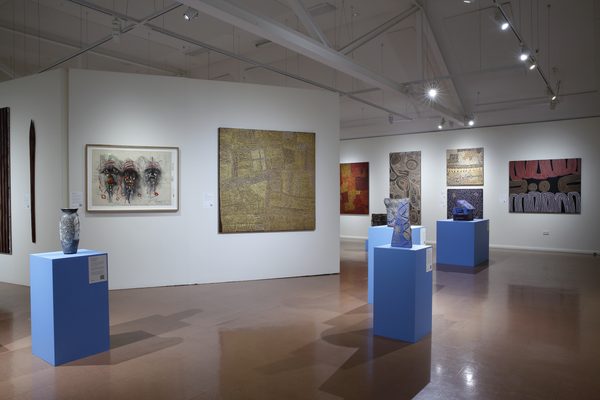
One of the nation’s oldest and most extraordinary celebrations of Aboriginal art and culture, Desert Mob is set to open tomorrow evening (Thursday 10 September) with a momentous celebration of desert art and culture in Mparntwe/Alice Springs.
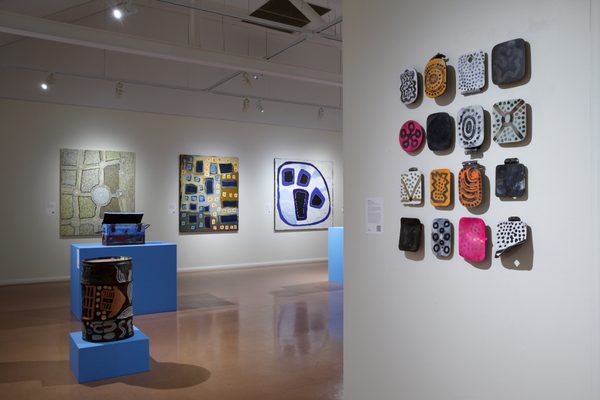
Presented by Desart, the peak body for Central Australian Aboriginal art centres, Desert Mob’s exciting program of events will take over the Araluen Arts Centre with the official opening of the renowned Desert Mob exhibition featuring hundreds of new works from Aboriginal artists across the Central Desert, a captivating day of artist talks, the vibrant Art Market, workshops, satellite events and After Dark – an evening of art, food and music.
In 2026, the Desert Mob exhibition also coincides with the Vincent Lingiari Art Award celebrating the 50th anniversary of the Aboriginal Land Rights Act (NT) 1976. Proudly presented by Desart and the Central Land Council, the Vincent Lingiari Art Award honours the legacy of Vincent Lingiari and the fight for land rights through the exhibition theme, ‘Our country, our culture: 50 years of land rights’.
Official opening celebrations will commence from 5pm (ACST) at the Araluen Cultural Precinct with an exclusive preview of the Desert Mob exhibition followed by a special presentation of guest speakers, the announcement of the prestigious Vincent Lingiari Art Award winners, and live performance by Eleanor Jawurlngali Dixon.
Quote attributable to Philip Watkins, Chief Executive Officer, Desart:
“Desart is proud to present Desert Mob again in 2026 and the work of artists who walk in the footsteps of their forebears and forge a pathway for others to follow. As any visitor to Desert Mob will know, the innumerable artworks by the many thousands of Central Australian artists over 35 years literally and creatively share common ground. Known by many names in this vast region of many languages, country means the same thing to us. Our artists tell the truth. Our land is our life.”
Quote attributable to Warren Williams, Chair, Central Land Council:
“After half a century of land rights and winning back more than half of the Northern Territory it is more important than ever that our land councils speak up for our people, insist on a seat at the table where decisions are made and protect them from harmful and ever-changing government laws and policies.
“The power of our art has always been central to our political power. We’ll continue to use all forms of expression to advance self-determination and Aboriginal-led policy solutions.”
Images for media use available here.
Cover image: CLC delegates Roxanne Kenny and Joyce Jones view the VLAA finalists at a council meeting in August. Photo: CLC/Anna Miers
As Aboriginal landowners dedicate an area two thirds the size of Tasmania as a protected area during a celebration in the Simpson Desert this week they are contributing to a significant milestone in Australia’s conservation history.
Adding three large Aboriginal land trusts in the south-eastern corner of the Northern Territory to Australia’s growing conservation estate means that the natural and cultural values of a quarter of the nation’s landmass is now protected by Aboriginal and other land managers.
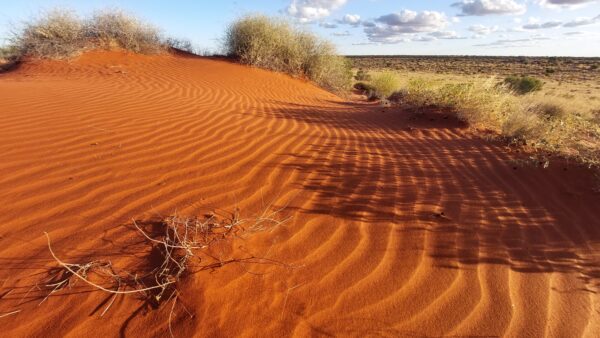
The new Pmere Atherre Antenterreme [Ap-ME-ra A-THA-rra A-NDAN-de-rre-ma] Indigenous Protected Area adds 47,311 square kilometres of Aboriginal land.
“The name of the new IPA means ‘working together to look after two areas of country’ and refers to two language and cultural groups,” said Central Land Council chief executive Les Turner.
Gathering on Tuesday, 14 July, at the Uluperte homeland, approximately four hours’ drive from Alice Springs, they will celebrate an agreement between the CLC and the federal government that funds them to better protect their sacred sites and around 900 animal and plant species.
“Three of our ranger groups will work with the traditional owners to look after the 21 threatened animal species found on the IPA,” Mr Turner said.
Among them are the crest-tailed mulgara, night parrot, bilby, dusky hopping mouse, plains mouse, princess parrot, grey falcon and eyrean grasswren. The area is also home to three threatened plants – birds nest wattle, sea heath and acacia peuce.
The traditional owners have developed an IPA management plan to guide them as they protect the fragile desert environment and their sites against weeds, feral animals, fires and the impacts of tourism.
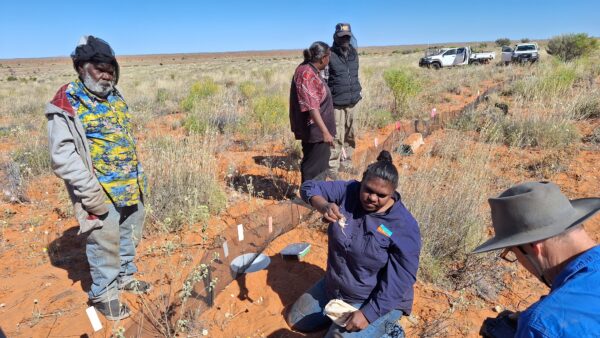
Traditional owner Damien Ryder likened the plan to a road map. “There’s already a rough road,” he said. “The plan is like a grader coming along and smoothing it out so we can get to where we want to go.”
The extra resources that come with the plan will allow families to visit this remote part of the Territory more often, so they can pass on their knowledge, songlines, laws, customs and ceremonies to their young people and strengthen their links to country. “Best thing is to take them out when they are school age to learn them young,” traditional owner Paul Williams said.
At the dedication celebration, children from schools near the IPA are expected to join the adults for activities such as tracking, hunting, looking for bush foods and making bush medicine. Traditional owner Marlene Doolan said there are “many stories and many songs” to pass on. “Our country is sacred to us, and we want to keep it strong,” she said.
IPAs are established under agreements between Aboriginal and Torres Strait Islander groups and the Australian government to manage and protect areas of land and sea for biodiversity conservation. They make up more than half of the national reserve system.