

The Central Land Council has warned that the NT government’s buffel management plan will lead to more large and destructive bushfires that put Territorians’ lives, communities, culture and heritage at risk.
The draft plan, which was quietly released before Christmas for a short public comment period, allows pastoralists to keep importing and spreading buffel seeds.
“This pretend plan exempts the vast majority of pastoralists from having to manage this weed and makes it everybody else’s problem,” Central Land Council chief executive Les Turner said. “It threatens not just remote communities but every Central Australian because we’re all living in a buffel-infested landscape.
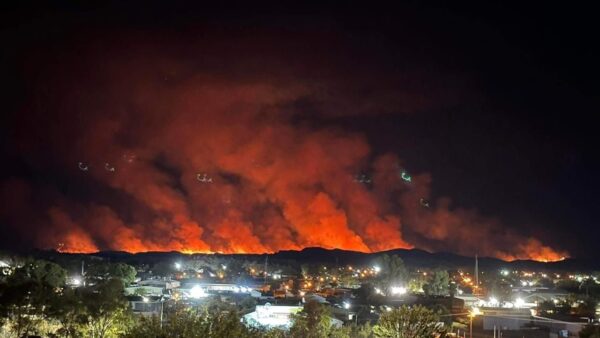
“Has the government already forgotten how this weed fuelled the large out-of-control bushfires two years ago that blanketed Alice Springs in smoke for weeks? When the air quality was on par with some of the most polluted cities in the world?”
Mr Turner said the plan will do very little to prevent landscape-scale bushfires that all land holders are having to increasingly battle and that cause species extinction.
It also pre-empts the economic analysis the government asked Charles Darwin University to conduct by March 2026.
“What’s the point of the assessment if it doesn’t even inform the plan? It’s based on politics, not evidence,” he said.
“It puts the interest of a single industry ahead of community safety – an industry that expects all its neighbours to suppress and fight fires that are being turbocharged by the weed.
“The government wants to push the burden of buffel control onto all non-pastoral land users and taxpayers and do nothing to stop its further spread.”
Mr Turner said the government expects Aboriginal land managers to keep trying to control buffel grass while leaving them utterly powerless to manage the source of the ongoing infestation.
“Our rangers are funded to manage protected areas, cultural sites and biodiversity by controlling fires, feral animals and weeds. They have a huge job already, but buffel management takes up more and more of their limited resources.
“That’s because this weed burns much hotter than native grasses and pushes other native plants and the animals that depend on them to the brink. It also threatens remote homelands that our rangers are expected to protect.”
By removing permit requirements for sowing buffel grass on crown land, the government has missed an opportunity to monitor its spread. Without permits, there is no record of which buffel varieties are being used where, undermining research into biological controls and buffel alternatives.
“All pastoralists should have to apply for individual permits,” Mr Turner said. “This gammon plan fails comprehensively to protect our shared cultural and environmental values and puts us all at greater risk. I urge everyone to lodge a submission about the plan before the 12 February deadline.”
The CLC and most other members of the government’s buffel grass technical working group oppose this wholesale exemption in the weed management plan.
South Australia has also declared buffel a weed and does not allow industry-wide exemption permits, with negligible impact on the pastoral industry.