The Central Land Council welcomes the Commonwealth’s decision to double the Remote Jobs Economic Development program from 3,000 to 6,000 jobs by 2030.
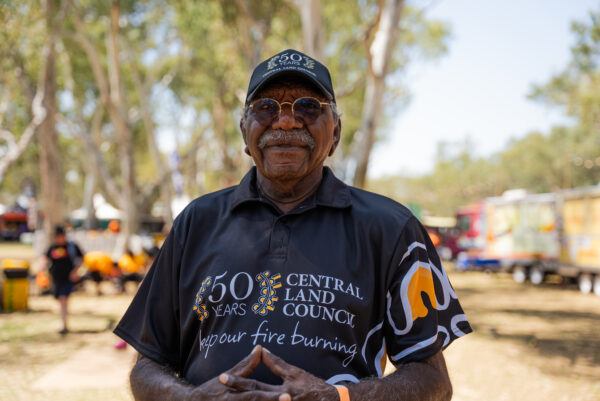
CLC chair Warren Williams said the council has been calling for remote employment reform for more than a decade.
He said although several factors contribute to low employment in remote communities, the most critical is the shortage of available jobs.
“This is exactly the kind of investment our communities need,” Mr Williams said.
“Real jobs in our communities keep our communities strong. They give us skills, income and dignity, and they allow families to stay on country.
“When our people have meaningful work, they can stay on their lands, keep practising culture and grow up strong young people.
“Without local jobs, we can’t close the gap and get to true self-determination,” he said.
CLC chief executive Les Turner said the expanded program is a significant step toward delivering long-overdue economic opportunities in remote Aboriginal communities.
“Creating more employment on the ground creates a strong foundation for our people to thrive,” Mr Turner said.

Download media release PDF

A landmark water rights case is before the High Court of Australia.

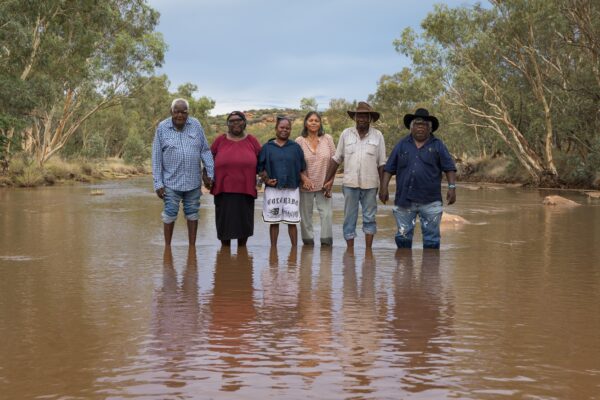
Six native title holders from the Mpwerempwer [pronounced Em BOORM Boora] Aboriginal Corporation will attend tomorrow’s hearing in Canberra and challenge the groundwater licence of a horticulture company that wants to grow fruit and vegetables in the desert south of Tennant Creek.

The licence authorises Fortune Agribusiness to extract 40 gigalitres of groundwater at Singleton Station every year for 30 years once it’s running at full capacity, making it the largest groundwater licence issued in the Northern Territory. After 30 years, this volume of groundwater will equal draining Sydney Harbour twice.

Experts value the water at between $70 million and $300 million, yet the NT government is granting the licence free of charge to Fortune Agribusiness. The company plans to use the precious water to grow crops, largely for international export.

The case marks a critical moment in the six-year legal battle by the region’s traditional owners, who say the project threatens sacred sites, cultural survival and a fragile desert water system.

The licence allows groundwater drawdown across thousands of hectares. The traditional owners warn that it risks permanently damaging an ancient aquifer, at least 40 groundwater-dependent sacred sites and community water supplies.

When groundwater levels drop below the reach of roots of sacred trees and plants, they die. Animals connected to dreaming stories disappear. Cultural practices that have continued for thousands of years are disrupted, causing deep emotional, social and physical distress for those responsible for this country.

Alyawarr traditional owner and 2026 Order of Australia medal recipient Frankie Holmes, who will attend the hearing, said water is central to people’s identity and survival.

“It’s water that’s special and it’s just not replaceable. It must be looked after. Our body and our blood and everything depends on water. Without water, we finish,” Mr Holmes said.

He emphasised the cultural responsibility passed down through generations.

“Looking after land and country, especially sacred trees, is very, very important for us. Ancestors hand it over to us to look after these waters and these lands. This is important to keep it going and for us to keep passing it on.”

Native title holder and Mpwerempwer director Dawn Swan said the High Court’s decision to hear the case gave her hope.

“Finally, someone is listening. I am very happy. We have people living on the land and this is their dream to stay here for future generations,” she said.

“This has been a long journey, and we will continue to fight for our sacred sites and culture,” she said.

Download media release PDF

Download Singleton-High-Court-fact-sheet

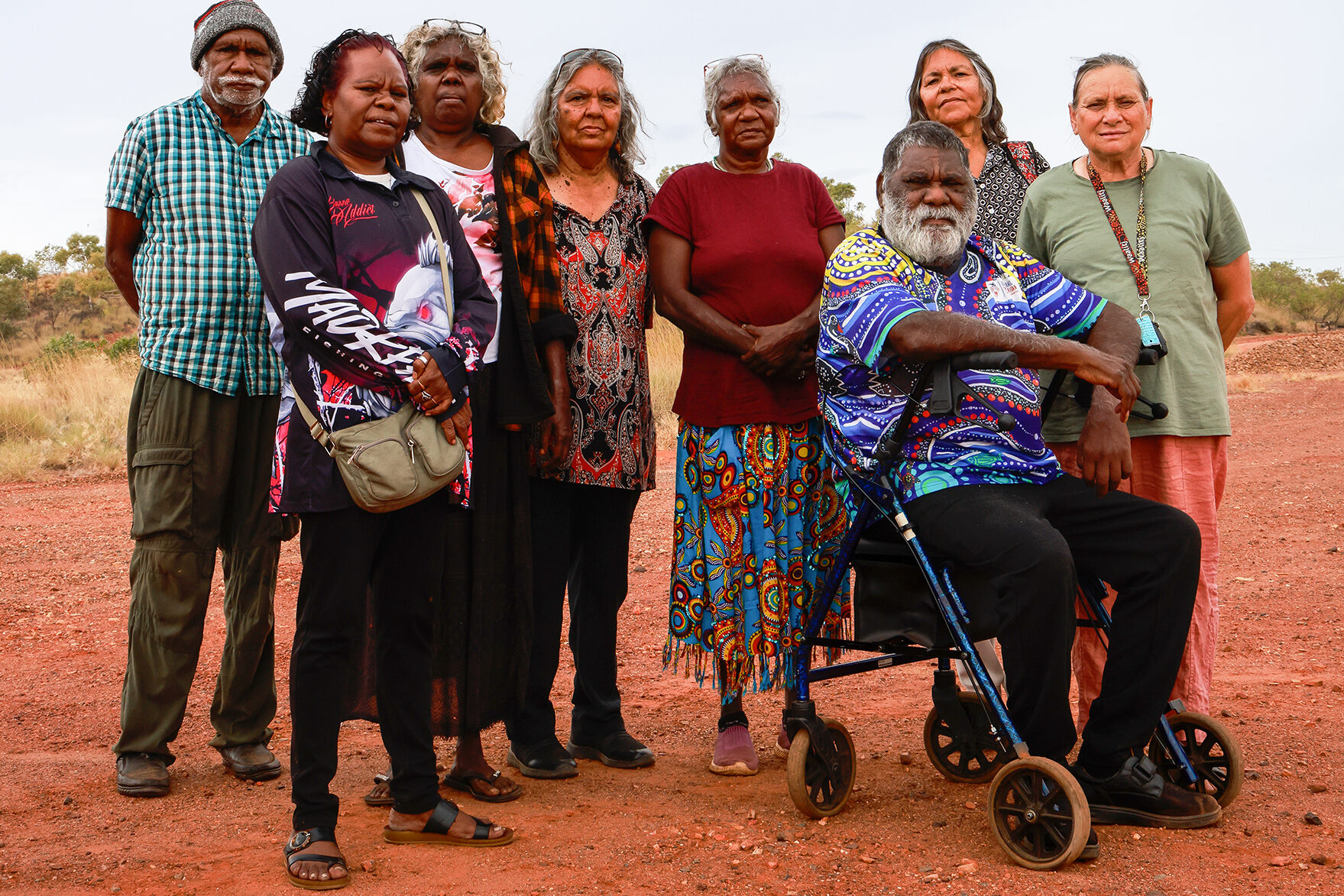
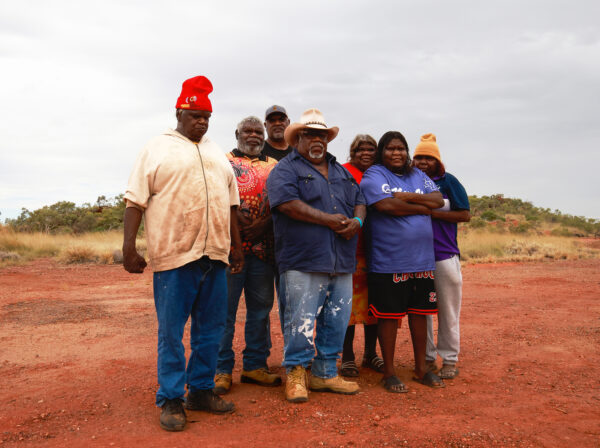
Gerry Rice, Valerie Curtis, Arana Rice, Judith Swan, Valerie Nelson, Dawn Swan, Frankie Curtis and Verna Curtis believe the Singleton water licence will destroy too many sacred sites and the desert region’s native plants and animals that depend on its groundwater

“FINALLY, someone is listening,” was the immediate reaction of Dawn Swan to the High Court of Australia’s decision in September to hear the appeal against Singleton Station’s water licence.

“I am very happy. We have people living on the land and this is their dream to stay here for future generations,” Ms Swan, a native title holder for the station, said.

Fortune Agribusiness’ licence to extract 40 gigalitres of groundwater a year from the station, south of Tennant Creek, represents the largest amount of groundwater ever given away by the Northern Territory.

The Mpwerempwer Aboriginal Corporation, which represents native title holders, has argued the licence will destroy too many sacred sites and the desert region’s native plants and animals that depend on its groundwater.

Native title holders described the High Court’s decision as incredibly important.

“The reason why we are fighting is because the amount of water Fortune [Agribusiness] wants to take from our land is too much,” native title holder Valerie Curtis said.

“We’re happy to share the water, but to us it just seems like they want more than enough and it’s not fair on us. It’s not fair on our country. It’s not fair on our future generations,” she said.

“This has been a long journey, and we will continue to fight for our sacred sites and culture,” Ms Swan said.

The case is likely to be heard next year and, if successful, the water licence would be invalid and likely to be sent back to the NT minister to decide on again, but this time in accordance with the law.

The appeal does not stop the NT’s environmental approval process and Mpwerempwer and other affected traditional owners are working with the Central Land Council and Fortune Agribusiness, the lease holders of Singleton Station, on the environmental impact assessment.

Before the assessment is finished the company is not allowed to use the licence to extract groundwater.

“We want to make sure the study is done properly so that Fortune Agribusiness, the NT government and the Environment Protection Agency hear how deeply Aboriginal people fear the damage this much groundwater extraction could cause to their country and culture,” the CLC’s chief executive Les Turner said.

Mr Turner said Mpwerempwer’s decision to pursue the case to the High Court shows that “water rights are inseparable from land rights and go to the heart of protecting culture.”

The High Court will decide if the NT Court of Appeal was wrong when it found that the NT minister lawfully granted the licence.

It will consider if the minister properly took Aboriginal cultural values into account or properly considered if there were exceptional circumstances that justified a licence for 30 years. It will also consider if the native title holders were entitled to the same procedural fairness as Fortune Agribusiness.

For example, Fortune was given an opportunity to review the water licence condition before the licence was granted. Native title holders were not given a chance to review the condition about assessing cultural values.

Ms Curtis said she was very excited the court would hear their story.

“It makes me feel happy. We want to fight for our rights, our sacred sites and our country, to be heard and for it to be fair,” she said.


The Central Land Council has called on the federal government to act quickly and decisively to end the Northern Territory’s remote education crisis.

“We need federal action to prevent a total collapse of the NT’s remote government education system which is starved of funds and unable to support the needs of all children,” CLC chief executive Les Turner said.

“We call on the Albanese government to bridge the scandalous education gap with an immediate emergency equity package that ensures our students are funded to the same level as students in the rest of the country from the start of next school year.

“It needs to use all levers, including $175 million in emergency funding for the next two years, to get the NT government to fund schools based on enrolment from next January.”

The Territory has bloated its education bureaucracy and starved remote government schools by funding schools based on attendance, rather than enrolment, since 2015.

It spends on average 20 per cent less on the education of NT children than the minimum spent on students everywhere else.

This figure hides the true extent of underfunding, with some remote schools receiving only a third of what they would get if they were funded based on enrolments.

School attendance under the so-called ‘effective enrolment’ policy is plummeting across the NT, with an average of only 41.2 per cent of students attending at least four days a week in the CLC region, the southern half of the Territory.

“Remote students in government schools are the biggest losers under this policy,” Mr Turner said.

The policy wipes out any progress federal funding for remote and disadvantaged children could achieve.

“Remote government schools currently cannot cope with additional students because they are not be able to support them,” he said.

“The policy is fuelling a race to the bottom when it comes to attendance and student achievement.”

A 2022 review of the NT’s policy by Deloitte’s found that the effective enrolment policy created uncertainty, prevented investment in quality engagement strategies and “led to band aid solutions to boosting attendance”.

Mr Turner said even remote students with good attendance faced enormous barriers because their schools don’t offer secondary education.

“It is deeply unfair that our children have to leave home and become boarders if they want to go to High School – a hurdle that is too high for most. This is not a real choice for Aboriginal families.”

“This is a clear-cut example of where a voice to parliament would hold governments accountable for the tax dollars they receive and to provide local knowledge and advice that ensures they are spent where they are most needed and make a difference on the ground,” he said.

“We appeal to all Australians to vote Yes so that governments can be held accountable for education spending and meet the needs of all our children into the future.”

Contact: Elke Wiesmann | 0417 877 579| media@clc.org.au

Download the PDF