
Desart and the Central Land Council are proud to present the prestigious Vincent Lingiari Art Award for the fourth time.

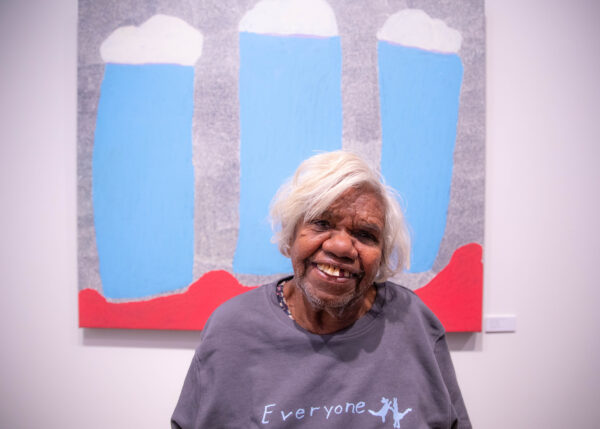
Vincent Lingiari Art Award 2021 winner Grace Robinya with her artwork ‘Raining at Laramba’. Photo by Oliver Eclipse. Courtesy Desart

The nationally renowned award honours the legacy of Vincent Lingiari, the Wave Hill Walk-Off and the struggle for land rights.

This year’s award will celebrate the 50th anniversary of the passing of the Aboriginal Land Rights Act (NT) 1976 with an exhibition themed Our Country, Our Culture: 50 Years of Land Rights. The landmark law saw the establishment of the Northern Territory’s two largest land councils and allowed them to claim more than half of the NT back for the traditional landowners.

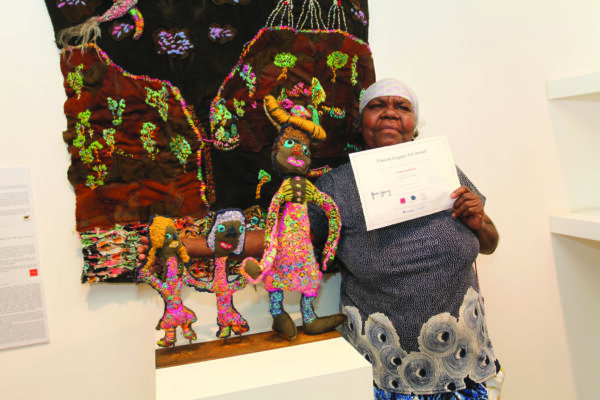
Vincent Lingiari Art Award 2016 winner Marlene Rubuntja with her artwork My Future is in my hands.

Since the inaugural Vincent Lingiari Art Award in 2016, Aboriginal artists whose country is in the CLC region have submitted works in a wide range of media. In 2026, the award will offer a $10,000 major prize to the most outstanding artwork in the exhibition, the CLC Delegates’ Choice Award of $2,000 and the Desart People’s Choice Award of $2,000.

The award exhibition will open 17 August 2026 at the Araluen Arts Centre in Mparntwe (Alice Springs). The winners will be announced on 10 September, during the official opening celebration of the Vincent Lingiari Art Award which will coincide with the official opening of Desert Mob 2026.

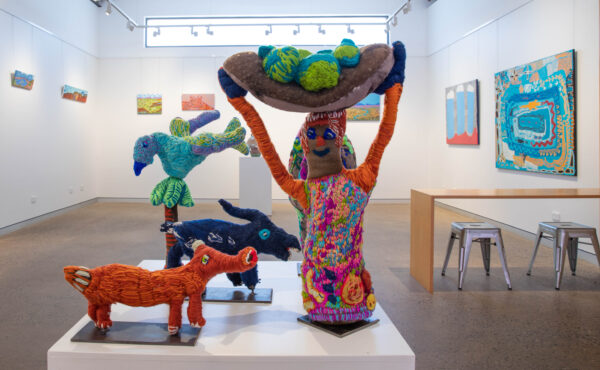
Vincent Lingiari Art Award 2021 exhibition featuring work by Marlene Rubuntja. Photo by Oliver Eclipse. Courtesy Desart

Desart and the CLC are thrilled to announce Kelli Cole, a Warumungu and Luritja woman from Central Australia, as the curator of the award. Ms Cole has helped shape the presentation of Indigenous art on a national stage, contributing to National Indigenous Art Triennials at the National Gallery of Australia and recently leading the curation of Emily Kam Kngwarray at the Tate Modern. Ms Cole has been engaging with Aboriginal art centres across the CLC region and Desart membership about the award since late last year.

Entries for the award close Friday 17 April 2026.

For information about how to enter, artists are encouraged to contact vlaa@desart.com.au.

Download media release PDF

The traditional owners of the Uluru – Kata Tjuta National Park and the federal government have agreed to vary the park’s 99-year lease.
The lease now offers more jobs on country for Anangu [ARR-na-ngu], better commercial financial terms for the traditional owners of the park and more income to help with the extreme cost of living out bush and invest in their community-driven development projects.

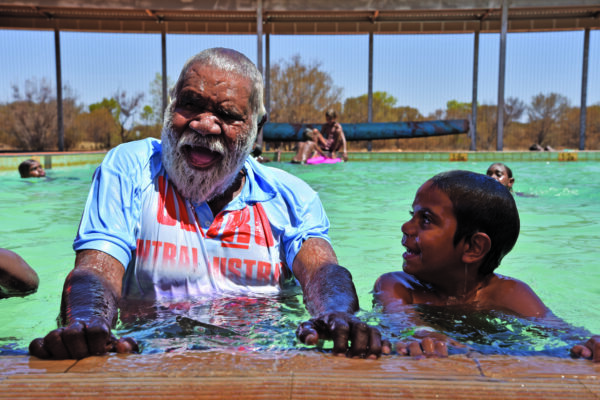
Reggie Uluru and his grandson in the Mutitjulu swimming pool


For two decades the Central Land Council has supported the traditional owners of the park and their communities in the cross-border region of Northern Territory, South Australia and Western Australia to use income from the park for Anangu education initiatives, recreational facilities, homeland infrastructure and other projects.


The traditional owners have invested almost $21 million in 102 projects in their communities, many of them multi-year initiatives, since 2006.
Among these projects are the pool in Mutitjulu, patrolled by Anangu lifeguards, and support for Anangu secondary boarding school students from the cross-border region and men’s cultural events out bush.
CLC delegate and Uluru community development working group member Kathleen Luckey welcomed the additional funds.


“We’ve been spending our money wisely for many years and want to keep using it to make our communities stronger. For example, we’d like to put a roof over the basketball court in Imanpa so we can play, meet and celebrate there even when it’s hot,” she said.


“Palya, the projects are helping us,” said Uluru working group and park board of management member, Alison Carroll.


“We want more of them to happen now. We have been speaking up strongly for our young people and we need them to become leaders like us and get jobs.”


The updated lease obliges the park to reach a 50 per cent Anangu full time equivalent employment target by 2030 and to do more to help Anangu businesses win contracts.


This is only the second time since the 1985 hand-back of the park to its traditional owners that their lease with the federal government has been updated.


The traditional owners and the CLC have been negotiating with Parks Australia about this latest lease variation since 2013.


“The new agreement delivers stronger protection for sacred sites and songlines, tougher consequences for damage and more robust joint management principles informed by tjukurpa [JU-kurr-pa],” CLC chief executive Les Turner said.


“That may mean accepting guidance from Anangu about where and when to undertake traditional burning or when to close the park for cultural reasons.”


Mr Turner said Parks Australia also agreed to recognise the traditional owners’ cultural and intellectual property, such as songs, dances, stories and cultural knowledge, and to seek their explicit permission to use it.

Download media release PDF

The Central Land Council is urging the federal government to urgently increase the remote area allowance to deliver real cost of living relief to the country’s poorest households in the face of rising fuel costs.

Already, Aboriginal people in remote communities are paying up to twice as much for fuel as people in cities, with diesel prices reaching $4 a litre in some areas. Soaring fuel costs are driving up the price of essentials and deepening cost of living pressures out bush.

Labor’s low-cost essentials subsidy scheme, while very welcome, is vulnerable to global uncertainty and energy price rises.

CLC general manager Dr Josie Douglas said rising fuel costs will wipe out the scheme’s gains by pushing up the price of fresh food and other essentials.

Without a meaningful increase in Centrelink income there is no buffer against an inevitable surge in the cost of living.

“The subsidy helps, but fuel prices will quickly erode those savings,” she said.

“Prices for key items like fresh food will rise sharply, and families will struggle to keep up.”

Most people in remote communities rely on fixed incomes and have little capacity to absorb rising costs.

The 42-year-old remote area allowance provides a small supplementary payment to income support recipients in remote areas to offset extreme living costs out bush. It has failed to keep pace with reality.

Living costs in remote communities since 2000 have consistently been around 40 per cent higher than in capital cities. Yet the allowance pays just $9.10 a week for singles, $15.60 for couples, and $3.65 per child. It is not indexed and has increased only twice in more than four decades.

“The last increase was more than 25 years ago. With fuel prices hitting our people so hard, it’s time for the government to raise it,” Dr Douglas said.

“Cost of living pressures are being felt nationwide, but low-income families in remote communities are particularly hard hit.”

With more than half of all allowance recipients living in the Northern Territory, the CLC is calling on the federal government to make this cost of living reform a priority.

Download media release PDF

The Central Land Council’s Dr Josie Douglas and Georgie Stewart gave evidence warning the senate inquiry about the Environment Protection and Biodiversity Conservation Bill, which will leave critical environmental standards to be developed after it has been passed, risking irreversible damage to climate, country, culture and communities.

Indigenous people will be hit first and worst by the climate crisis, our voices must be heard as the federal government seeks to reform Australia’s environment law.

Read the Northern Territory land councils’ joint submission to the senate inquiry:

The federal government is proposing major changes to the Environment Protection and Biodiversity Conservation Act, Australia’s main environmental law. These reforms are supposed to strengthen protections for nature, but Aboriginal people are being left out of the conversation.

Dr Josie Douglas spoke to ABC News Breakfast about why that’s unacceptable. Aboriginal people hold legal rights and interests in 98 per cent of the Northern Territory – we must be at the table when decisions are made about caring for country. Without proper consultation, the reforms simply aren’t good enough.

The live broadcast aired October 30th, 2025.

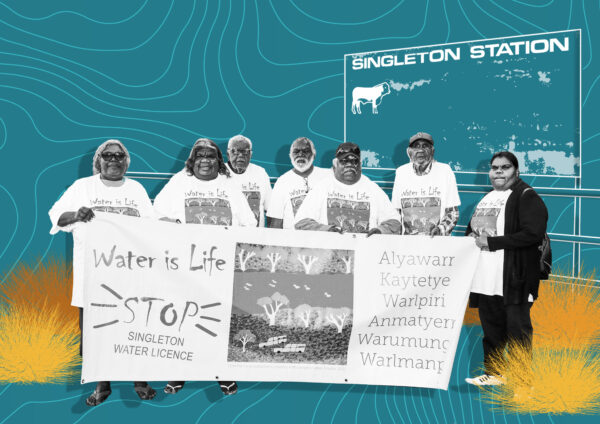
The current image has no alternative text. The file name is: SINGLETON_COMP1-scaled.jpg

The Central Land Council acknowledges the Northern Territory Court of Appeals’ decision today to dismiss native title holders’ appeal against the massive Singleton Station water licence.


“We will consider the reasons behind the judgment once they are released, explain them to the native title holders and remote communities affected by the controversial water licence and seek their instructions,” CLC chief executive Les Turner said.


“They have said many times that they will never stop fighting against the licence that threatens their sacred sites and their communities’ water security, so we’ll consider all avenues open to them now.”


The failed appeal comes more than three years after the native title holders’ Mpwerempwer [pronounced emPUrra-empurra] Aboriginal Corporation asked the NT Supreme Court to set aside an NT government decision to grant a licence to extract up to 40 gigalitres per year to irrigate an export-oriented horticulture farm in the desert.


The licence represents the largest amount of groundwater the NT has ever given away – free of charge.


In February 2024 Mpwerempwer appealed the Supreme Court decision to reject its legal challenge against the government’s decision to grant the licence. The CLC assisted Mpwerempwer to bring the appeal.


Two years earlier Mpwerempwer and the Arid Lands Environment Centre took legal action against then NT Families Minister Kate Worden’s decision to grant Fortune Agribusiness the 30-year groundwater extraction licence for Singleton Station.


Mpwerempwer argued that the licence was invalid because the minister didn’t comply with the NT Water Act, failed to consider Aboriginal cultural values and other important matters.


“Our constituents are highly vulnerable to the impacts of climate change on their groundwater and their survival on their country depends on robust and transparent water planning more than ever,” Mr Turner said.

Download media release PDF