

Author: tess.oloughlin
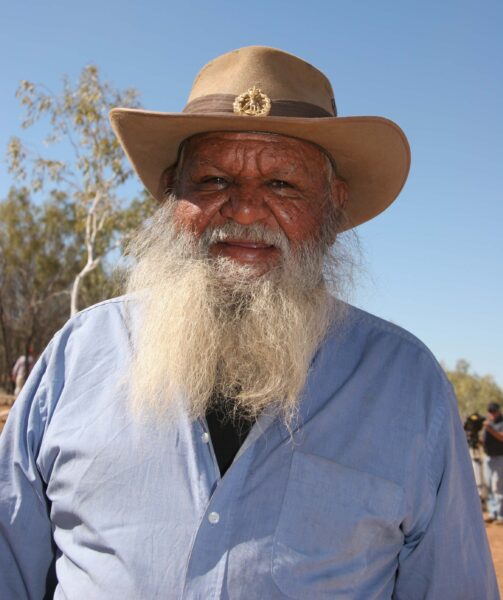
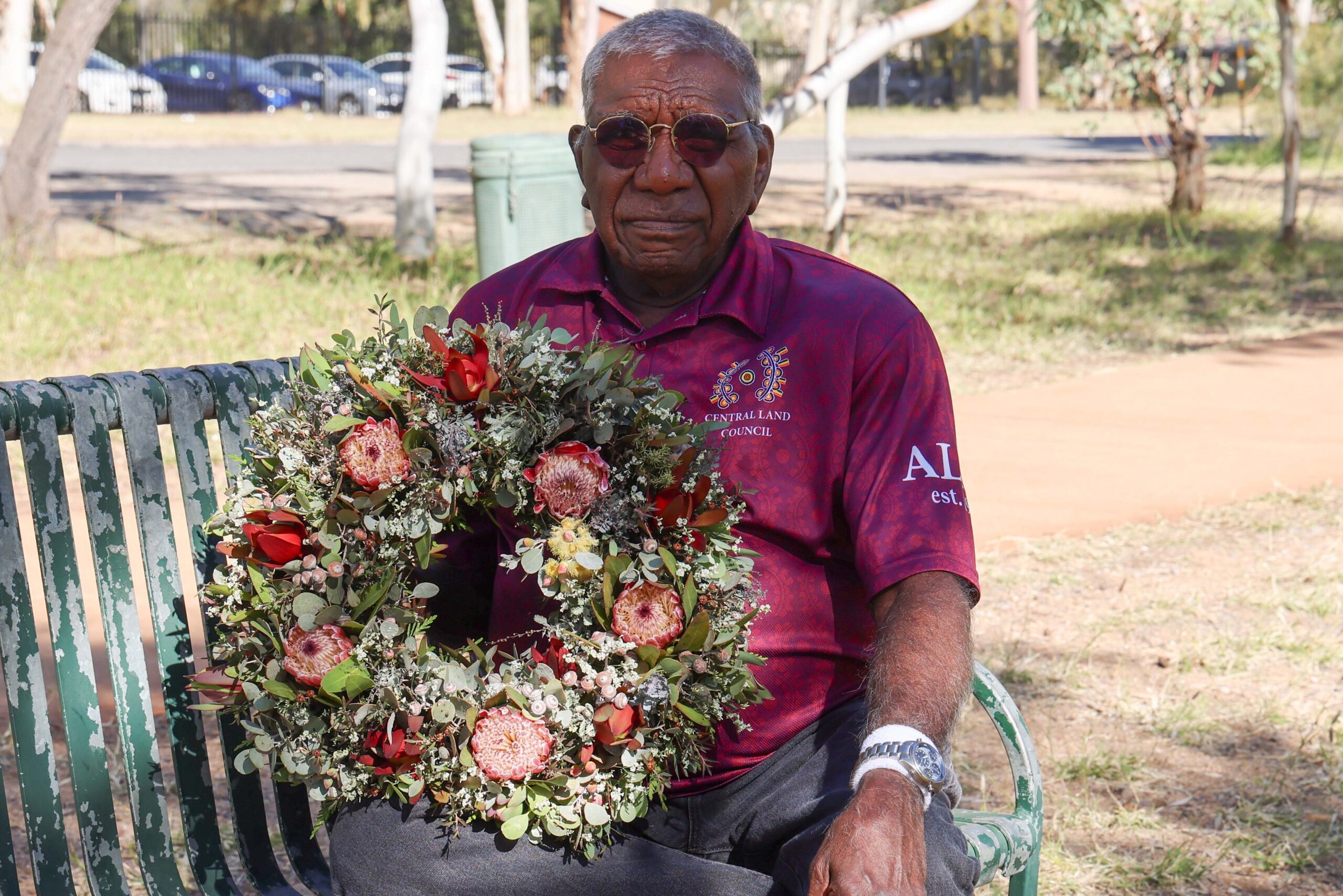
Central Land Council chair Warren Williams paid tribute to former deputy chair Geoffrey Shaw OAM, for his lifelong advocacy and leadership of Aboriginal people across Central Australia.
Mr Shaw, who passed away in Alice Springs this morning, was a founding member of the CLC and served as a delegate from its inception until 2006. He attended the landmark meetings in 1973, 1974 and 1975 that followed the Justice Woodward inquiries and led to the creation of the council.
“He gave many years of service to the Central Land Council and to Aboriginal people across Central Australia,” Mr Williams said.
Mr Shaw helped establish Tangentyere Council, later serving as its president, and became the first ATSIC Commissioner for Central Australia. He was a tireless advocate for essential services, housing and greater self-determination for Aboriginal communities throughout the region.
Mr Shaw joined the Australian Army and served in the Indonesian-Malaysian confrontation and completed two tours of duty in Vietnam.
“Mr Shaw believed deeply in service. To country, to community and to the nation,” Mr Williams said.
“His military service shaped his discipline, leadership and strong sense of responsibility, all of which he carried into his work with the CLC.”
A mentor to many young leaders, Mr Shaw inspired future generations to continue the struggle for justice, equality and recognition of Aboriginal rights.
“On behalf of the Central Land Council and the people we represent, I extend our sincere condolences to Mr Shaw’s family and friends,” he said.
“Mr Shaw’s contribution to this organisation, the land rights movement and the wider Central Australian community will be remembered with deep respect and gratitude.”
(Photo used with family permission)
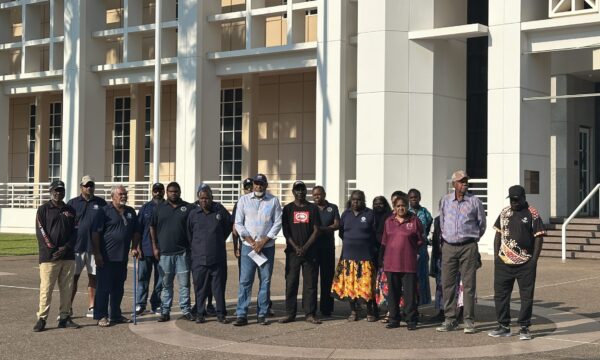
The Northern Territory’s land councils are warning a senate inquiry that proposed changes to environment laws risk irreversible damage to country, culture and communities.
The land councils are concerned that the Environment Protection and Biodiversity Conservation Bill will leave critical environmental standards to be developed after it has been passed.
“The federal government plans to push its bill through before setting important standards and is asking us to just trust them to get those right later,” CLC chair Warren Williams said.
“We’re at the frontline of climate change where heat records keep tumbling and threaten to make our communities uninhabitable. With our very survival on country at stake we simply can’t afford to take this crazy leap of faith.”
Central Land Council general manager Dr Josie Douglas will be in Canberra tomorrow afternoon to give evidence to a senate inquiry into the proposed changes to the EPBC Act and will argue they would fast-track development that harms Aboriginal people and their country.
The joint submission to the inquiry urges the senate to deeply embed climate change considerations in the architecture of the proposed legislation and in the standards’ project assessment and approval processes.
The land councils want the bill to protect Aboriginal people’s interests by giving the Indigenous advisory committee more teeth, for example the right to be consulted across the breadth of the EPBC Act.
“The recommendations to strengthen the committee don’t go far enough,” said Northern Land Council chief executive Yuseph Deen, who will join the inquiry from Darwin.
“It should be well-resourced, independent and representative of First Nations people. It should have the right to advise on the drafting of national environmental standards, monitor the impact of the bill on First Nations people and consult with traditional landowners.”
The land councils say the water trigger must apply not just to coal and gas projects, but thirsty mega-projects such as the controversial 40 gigalitre-per-year Singleton Station horticulture proposal.
They also call the proposed law’s 30-day consultation period for establishing development regions inadequate.
“We need at least 90 days to consult with traditional owners and ask for their free, prior and informed consent,” Mr Deen said.
The submission argues for a watertight standard for delegating powers under the EPBC Act to states and territories.
“The standards need to be high enough to prevent the NT government from further slashing environmental and sacred site protections,” he said. “We need strong, national standards that are enforced by the Commonwealth.”
Aboriginal Territorians hold freehold title and native title rights over 98 per cent of the NT but have been excluded from the consultations about the EPBC Act.
A Land Rights News article.
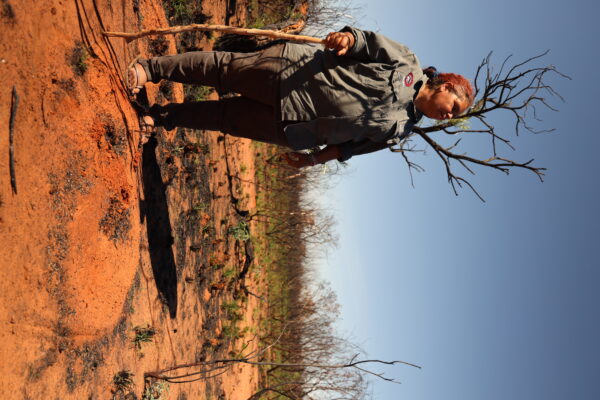
Combining Aboriginal ways of knowing with scientific monitoring of bilbies makes for better research.
Lajamanu traditional owners and rangers are helping a researcher find bilby tracks, identify their desert environments and threats and develop conservation strategies.
Dr Hayley Geyle relies on the lead ranger of the Central Land Council’s North Tanami Rangers, Helen Wilson, and her community to find the shy nocturnal creatures. Together, they learn more about the size of their families and develop strategies to protect bilbies from cats and foxes.
“My work would not have been possible without traditional owners and rangers. They’ve taught me so much about how to track animals across this landscape. They have deep knowledge of bilbies–where they live, how they behave and what’s putting them at risk,” she said.
Studying bilbies over the past four years with Yapa has helped the researcher from Territory Natural Resource Management and Charles Darwin University gain clearer and deeper knowledge.
“It’s given me a whole new understanding of how these animals might be interacting across the landscape,” Dr Geyle said.
“It’s been really great to learn from elders and rangers and to bring that knowledge into our science. It’s definitely led to much better outcomes.” For example when looking for bilby poo, also known as kuna or scats.
“A study we published together showed that we were able to find a lot more bilby scats when we based our surveys on local tracking knowledge, compared to standard scientific methods.”
Ms Wilson said the traditional owners are keen to be part of the research.
“The community come out with us when we do the surveys. They really like to learn. It creates excitement.”
She said Yapa liked working with Dr Geyle because she listens to them. “We make a good team.”
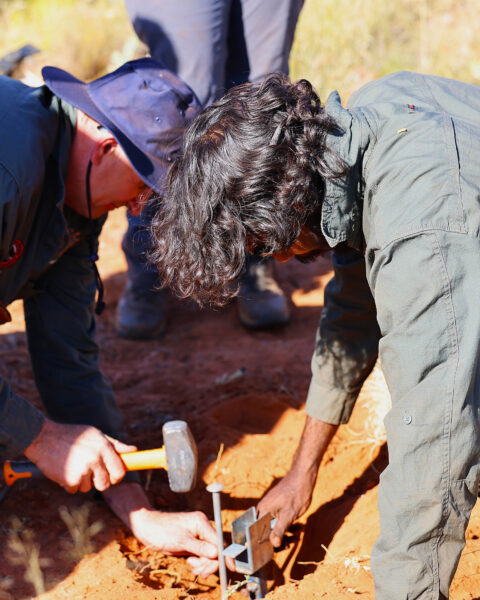
The two-way knowledge sharing gained national attention with Ms Wilson and Dr Geyle winning the 2024 Bush Heritage Australia ‘Right Way’ Science award at the Ecological Society Australia conference.
“I feel happy and pleased because I am doing my work for my people, the community and country,” said Ms Wilson.
Before colonisation, bilbies lived across most of Australia. Today, they’re found in less than a quarter of their former range, mainly because of feral predators and changes to how country is burned and looked after.
In July, North Tanami rangers Ms Wilson, Travis Penn and Kealyn Kelly and traditional owner Silas James took Dr Geyle to known bilby sites on the Northern Tanami Indigenous Protected Area to test a method for controlling foxes that doesn’t harm dingoes.
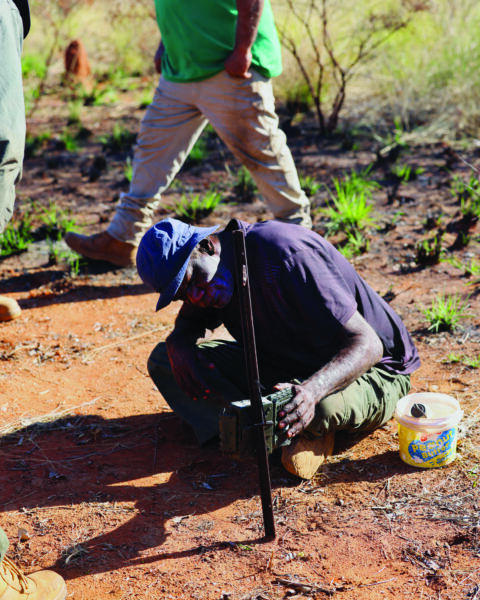
The team checked on spring-loaded baiting devices and the motion-sensor cameras they had deployed earlier to monitor how foxes, cats and other animals interacted with the devices. They also surveyed track plots and flew drones to look for signs of bilbies and other animals. The cameras confirmed what traditional owners already knew: foxes are very busy in the area.
The team tested the baiting devices with dried meat but without the poison capsule they can release when triggered by foxes.
It consulted elders throughout the process to ensure dingoes, which are sacred to the area, would not be harmed. The trap’s design included a special collar that stop dingoes from triggering the devices.
“Next, we’ll go through the footage with the rangers and traditional owners and have a yarn about whether this method is a good fit for the Northern Tanami,” said Dr Geyle.
The rangers showed how good they are at finding signs of bilbies from a moving car. Driving at 40 kilometres per hour they asked to pull over every time they spotted new burrows metres from the track. Ms Wilson collected bilby poo while Dr Geyle recorded the locations on her phone app.
The team expanded the search by scanning hard-to-reach areas with drones. Then the workers searched the ground where the drone footage showed signs of bilbies.
“There’s a few things I’ve learned, like recording the data on the iPad and the phone,” Mr Kelly said. “The cameras also, I’m trying to figure out how they work and everything, and trying to put them in spots where they can’t get destroyed by fire or some other animal.”
He said Yapa ways are front and centre of the work.
“Some parts where we do the surveys, some women or some men aren’t allowed to go on that site… so we just work as a team you know, try to divide the group and try to record as much data as we can.”
Dr Geyle said the work the team produced together was strong, both from a scientific point of view and from a cultural point of view. “It’s really helped us collect better data, by working with people who know the land the best and can guide us to areas where bilbies or foxes are likely to be,” she said.
“More than that, it reflects a whole different world view, one that is deeply connected to country and built on generations of lived experience. This perspective brings knowledge, values and ways of seeing that are just as important as the science. Without it, we’d be missing a big part of the picture.”
A Land Rights News article
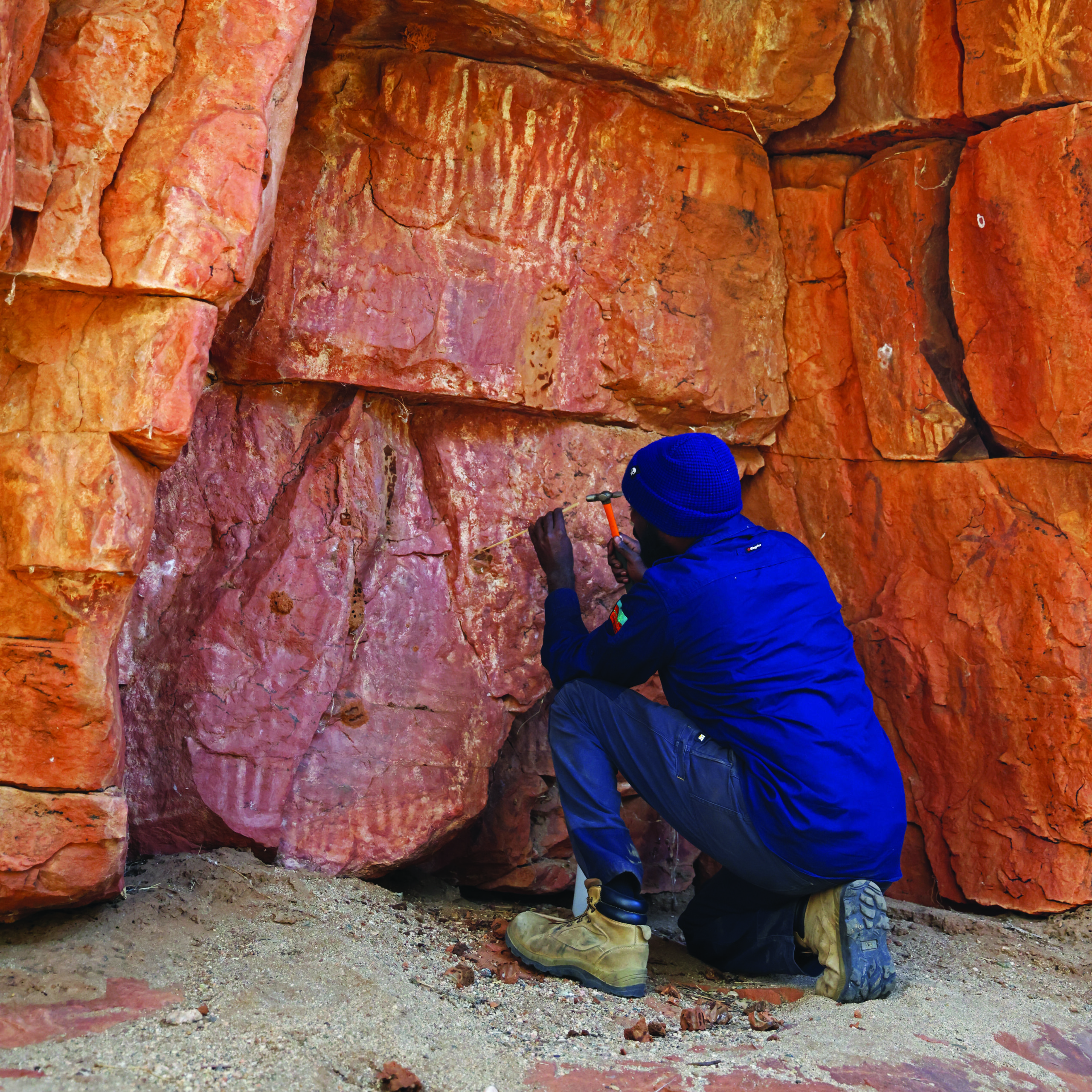
Since Ltyentye Apurte ranger Anton McMillan learnt how to remove swallow nests from rock art from the Kaltukatjara Rangers four years ago he has seized every opportunity to use his skills.
“The paintings tell our story. I want to share our knowledge,” he said.
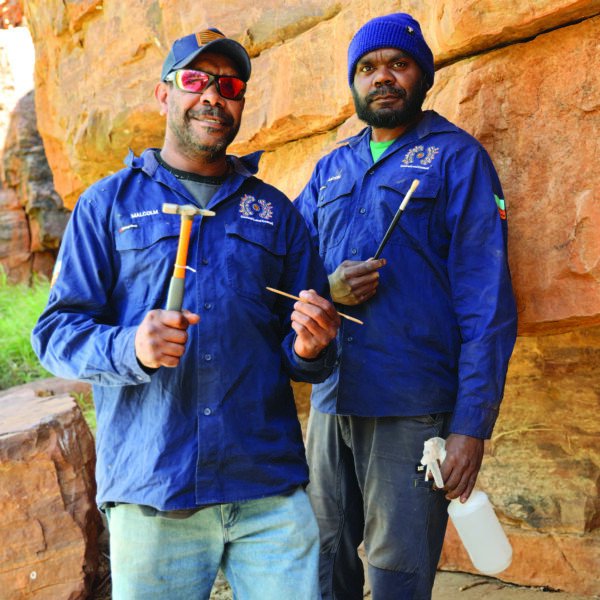
He and his fellow rangers practiced the delicate craft of cleaning hornet wasp nests covering rock art on the Trephina Gorge cliff face.
Located near the creek bed, about a hundred metres from the carpark of the popular tourist spot, the once obscured painting is now clear for visitors to enjoy.
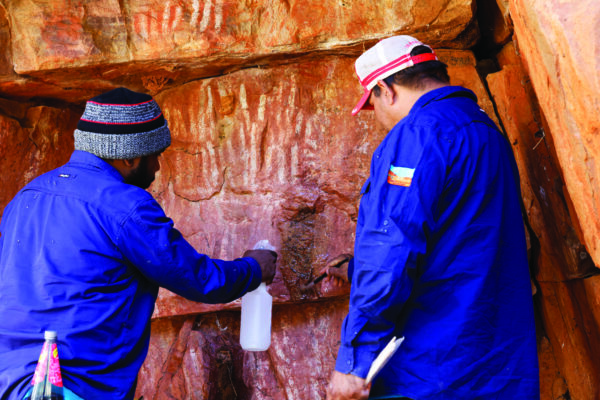
Mr McMillan uses the same technique for all nests made of mud, no matter whether they were built by birds or insects.
First he sprays turpentine on the nests to soften up the dirt on and around the paintings.
He carefully uses a hammer to remove larger chunks of the nest and chips at bits of dirt with chopsticks before removing leftover dirt with fine pointed picks.
He then reapplies the spray and waits for it to dry. “When the chemicals dry off is when you get to see where you want to start brushing away,” he said.
Protecting the art is painstaking work. “You don’t want to damage the painting.” Mr McMillan said it’s best to “slowly take your time”.
Visiting the site for the first time Ltyentye Apurte traditional owner, Jeremy Williams, was glad the rangers were restoring it.
“It is very important. It’s been there for years and years.”
The buzz the restoration is generating around his community motivates Mr McMillan to keep going.
He hopes the rangers will continue to care for the paintings. “They’ve been here for a long time, so hopefully they stay that way, and we keep looking after it.”
A Land Rights News article

When Tennant Creek locals rescued a bilby from its dead mother’s pouch in late 2021 it was the beginning of an amazing genetic journey.
After being told about a baby bilby whose mother had been killed on a road near Bootu Creek Mine Muru-Warinyi Ankkul ranger, Gladys Brown, travelled with family to rescue the hairless tiny creature.
Ms Brown, her niece Dianne Stokes and Ms Stokes’ daughter Amber drove two hours to retrieve the bilby from Ms Stokes’ son, Sebastian Waistcoat, who worked at the mine.
“It was a real family event. We all hadn’t seen a bilby before, we wanted to go and see what it looked like. First time looking at a small bilby. It’s a bit different to baby kangaroos. It had sharp nails,” she said.
“It was moving around probably missing its mother. I was cuddling it and making sure it was alright.”
Ms Brown named the joey Lukkanu, meaning star in Warlmanpa.
“I felt sorry for him losing his mother so I took him to the vet,” Ms Brown said.
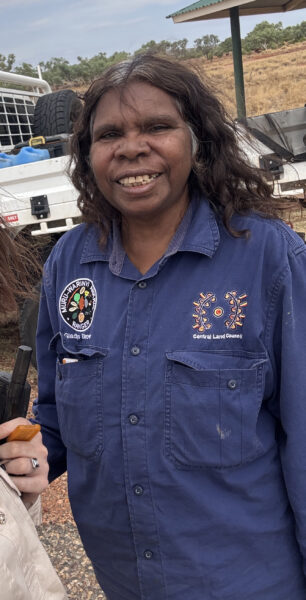
After caring for him they gave Lukkanu to Tennant Creek wildlife carer Carol Hepburn who sought advice from the Alice Springs Desert Park and Sea World. She mothered, fed and provided him with round-the-clock care for a couple of months.
“I care for pretty much anything that’s not venomous, like wallabies, kangaroos and other smaller animals, ’’ Ms Hepburn said.
Once Lukkanu grew fur and became strong he was relocated to the Alice Springs Desert Park where his breeding journey began. Thanks to Ms Hepburn’s care during Lukkanu’s most vulnerable stages, he went on to greater bilby things.
As a wild-born animal he provided valuable genetic diversity for the Desert Park’s bilby breeding program and fathered two female and four male joeys.
Lukkanu’s male joeys Kulbar, Mr NT and Tyson were transferred to other captive breeding programs across the country. Kulbar was moved to Kanyana Wildlife in Western Australia, Mr NT to Charleville Wildlife Sanctuary in Queensland and Tyson stayed temporarily at Monarto Safari Park in South Australia and bred joeys Clive and Trish before moving to Currumbin in Queensland.
Early this year Ms Brown wanted to visit Lukkanu and found he had moved to Monarto Safari Park which hosts the Zoo and Aquarium Association’s national Bilby Species Management Program.
Lukkanu had been renamed TC but after Ms Brown let the park’s Bilby Metapopulation Coordinator, Claire Ford, know his Warlmanpa name they changed it back to Lukkanu.
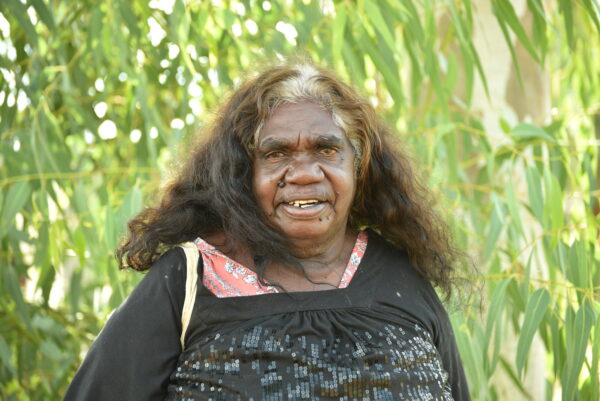
In July Lukkanu met Gigi and they bred a new joey.
Now at the age of four (31 in bilby years) and weighing two kilos Lukkanu provides rare and valuable genetics to the intensive breeding program.
Genetic diversity is important to grow bilby numbers, prevent inbreeding and for overall healthier bilbies.
Introducing wild bilbies to breeding programs also helps bilbies to thrive out bush for generations to come. When bilbies are released back into the bush this genetic boost makes sure they have the best possible chance of survival.
“We can’t thank you enough… Lukkanu is making such a wonderful contribution to the bilby breeding program,” Ms Ford said.
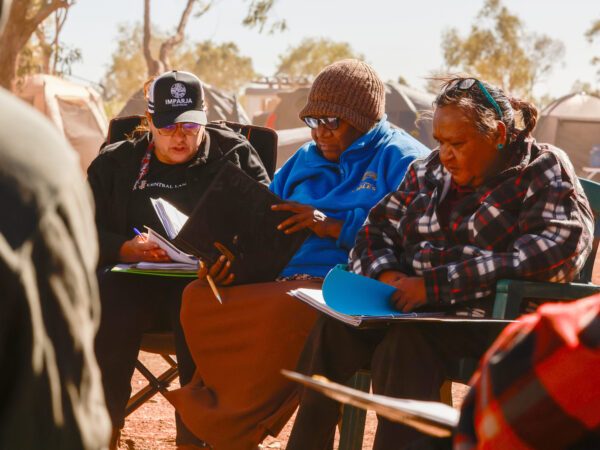
POLICY PRIORITIES SET
Council members decided what they want the CLC to advocate for during the next three years.
Their priorities are liveable housing, improving how decisions about water are made and a stronger focus on safe drinking water, protecting land and native title rights, lowering the cost of remote living, strengthening Aboriginal control of communities and building resilient communities and homelands.
They also discussed laws, such as the Territory Coordinator Act and the Aboriginal Sacred Sites Act, that the NT government made or changed without consulting with Aboriginal people.
COUNCIL BACKS VOLUNTARY INCOME MANAGEMENT
The CLC has opposed compulsory income management for almost 20 years.
The council discussed the Australian government’s plan to eventually wind it up.
Members said people should have the option of a voluntary system and a careful plan supporting people to manage their own money. If they want, they should be able to set some aside for rent, power, food and other essentials.
The council also said the government should set up a group of Aboriginal organisations to plan how the changes will be put in place, so people are well supported.

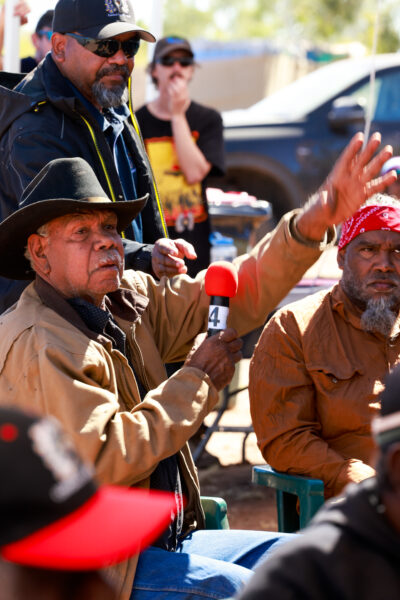
CALL TO INCREASE REMOTE AREA ALLOWANCE
The council called on the Australian government to urgently increase the remote area allowance to help families meet the high cost of living in remote communities.
Delegates want the government to carry out a review of the payment before deciding by how much it should increase and what areas should be included in the category of remote and very remote.
They also want the review to look at applying the allowance to the family tax benefit and setting fair review periods.
The council said the review should start as soon as possible and be guided by Aboriginal community-controlled organisations and other groups representing people who receive the allowance.
LOCAL GOVERNMENT CHANGES FLAGGED
NT Aboriginal affairs minister Steve Edgington told delegates he will start discussions in Central Australia and the Barkly about bringing back smaller local government community councils.
He didn’t provide details on timeframe, funding or plans on how this will all happen.
LABOR HEARS COUNCIL’S CONCERNS
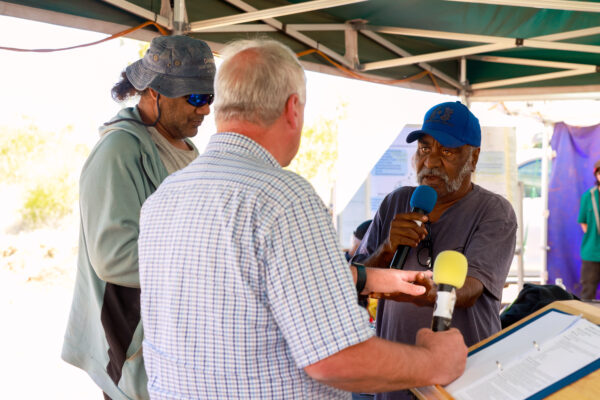
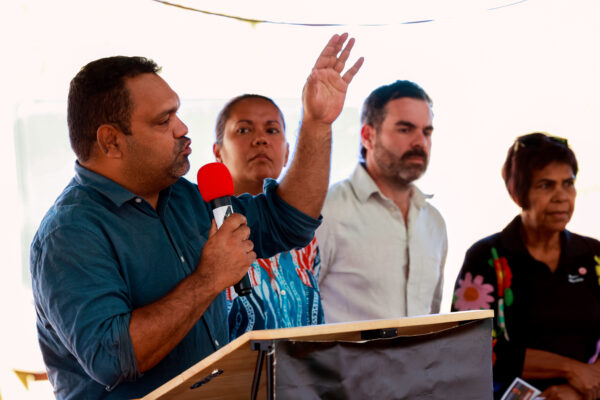
Members told Labor politicians Marion Scrymgour, Selena Uibo, Chansey Paech, Dheran Young and Manuel Brown about their worries about the NT government.
They condemned its failure to consult on changes to sacred sites laws and said soaring incarceration rates and racism in the NT police are making life harder for Aboriginal people.
TERRITORY COORDINATOR PROMISES
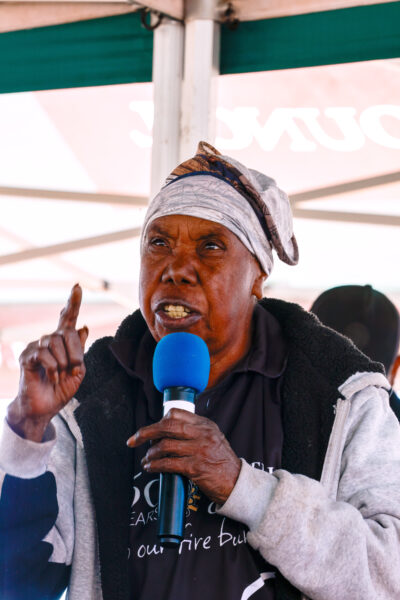
The Territory coordinator downplayed the powers of his role.
He promised to consult with Aboriginal people before making decisions and said he did not see a role for himself in the Singleton Station horticulture project.
POLICE RACISM QUESTIONED
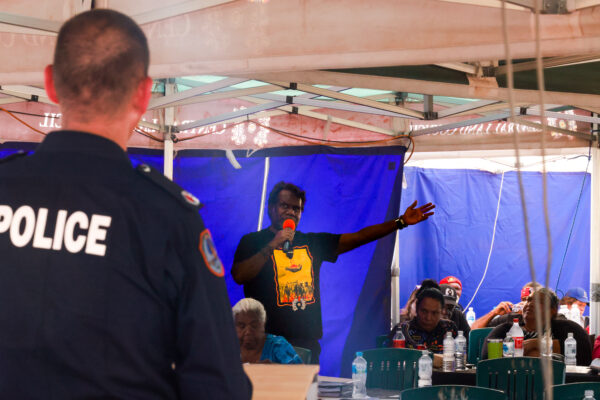
Delegates pressed the acting police commissioner on what is happening to stamp out racism in the NT police force.
He said the NT police anti-racism strategy will follow the recommendations from the Kumanjayi Walker coronial inquest and that he supported Aboriginal organisations to be involved in designing an implementation plan.
CLC meetings
Executive: 10–11 September 2025, Alice Springs
Council: 27–29 October 2025, Yulara
The council makes decisions in the best interests of Aboriginal people in our region and to keep the CLC strong. Its meeting rules support strong governance.
To read these rules and the council minutes at our Alice Springs office please contact our strategy and performance manager on 8951 6211.
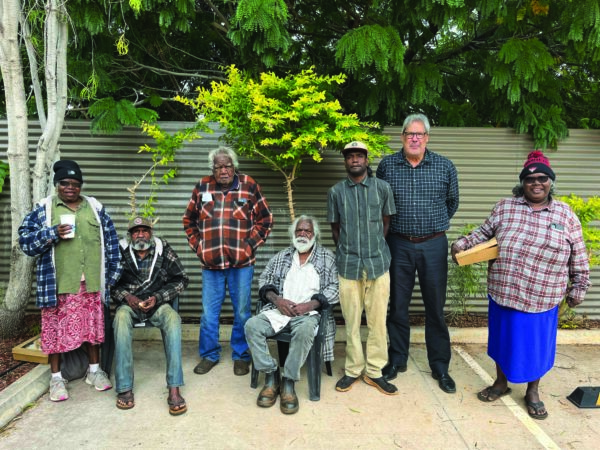
The High Court’s decision yesterday to hear an appeal about Singleton Station’s water licence is a pivotal moment for native title holders.
Fortune Agribusiness’s licence to extract 40 gigalitres of groundwater a year from Singleton Station, south of Tennant Creek, represents the largest amount of groundwater ever given away by the Northern Territory.
The Mpwerempwer [pronounced emPUrra-empurra] Aboriginal Corporation, which represents native title holders, has argued the licence will destroy too many sacred water sites and the desert region’s native plants and animals that depend on this water.
Native title holders described the High Court’s decision to hear the case as incredibly important.
“Finally, someone is listening. I am very happy. We have people living on the land and this is their dream to stay here for future generations,” native title holder Dawn Swan said.
“I am thinking of the old people. They want to know before they pass on, that the country is safe, that it is protected.
“This has been a long journey, and we will continue to fight for our sacred sites and culture,” she said.
Mpwerempwer and other affected traditional owners are also engaging in the environmental impact assessment required for the horticulture project and are working with the Central Land Council to ensure it’s a rigorous process.
“We will bring a forensic approach to understanding how Fortune Agribusiness will protect the dozens of sacred sites, hunting and gathering grounds and other important stories and places on Singleton,” CLC Chief Executive Officer Les Turner said.
Mr Turner said native title holders’ decision to pursue the case to the High Court shows that water rights are inseparable from land rights and go to the heart of protecting culture.
Native title holder Valerie Curtis said she was very excited the court would hear their story.
“It makes me feel happy. We want to fight for our rights, our sacred sites and our country, to be heard and for it to be fair,” she said.
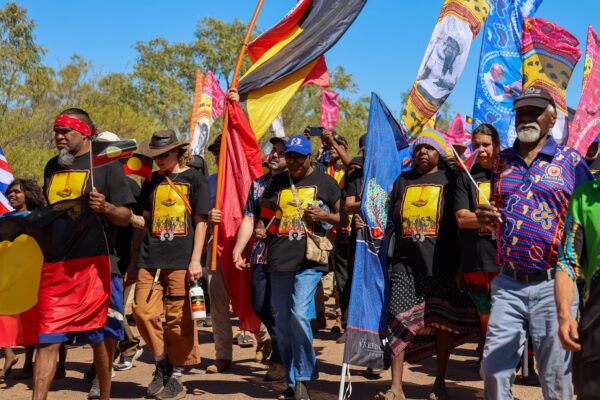
Our council met at Kalkaringi this week, marking 50 years since the historic Gurindji handback, a watershed moment for land rights in the Northern Territory and Australia.
The courage of the Gurindji people at Wave Hill changed the nation, but we say the struggle for our rights is far from over.
At the meeting, we set policy priorities for the council’s three year-term. They are liveable housing, strong water governance and safe drinking water, protecting land and native title rights, lowering the cost of remote living, strengthening Aboriginal governance and building resilient communities and homelands.
We voiced deep concerns about the punitive laws and policies of the NT’s Country Liberal Party government.
We condemned the lack of consultation about changes to sacred sites laws and voiced concerns about soaring incarceration rates and racism in the NT police.
These laws and policies do not support our people—they punish them.
Aboriginal people make up over 30 per cent of the Northern Territory and we have been here since time immemorial. We are the Territory.
By ignoring our voices and rights, the CLP government is turning its back on our communities and making an already dire situation worse.
We heard from Labor’s federal member for Lingiari, Marion Scrymgour, NT opposition leader Selena Uibo and Labor members Chansey Paech, Dheran Young and Manuel Brown.
They said they were listening to our concerns and recognised just how serious the impacts of these policies are becoming for our people.
We want the Australian government to hold the NT government to account, ensure funding received for Aboriginal Territorians benefits us and alleviates our disadvantage, rather than used for other things or to harm us.
Governments must work with—not against—us to deliver real solutions.
NT Aboriginal affairs minister Steve Edgington told us he will begin discussions in Central Australia and the Barkly to bring back smaller local government councils to communities.
The Territory coordinator downplayed the powers of his role and promised to consult with Aboriginal people before making decisions that affect them. He said he did not see a role for himself in the Singleton Station horticulture project.
The acting police commissioner was pressed on what concrete steps are being taken to stamp out racism in the force that is costing Aboriginal lives. He told us that the anti-racism strategy will align with the recommendations from the Kumanjayi Walker coronial and have an implementation plan.
We look forward to joining the Freedom Day Walk today, following in the footsteps of the 1966 Wave Hill Walk-off to Lipananku (Victoria River).
A Land Rights News article
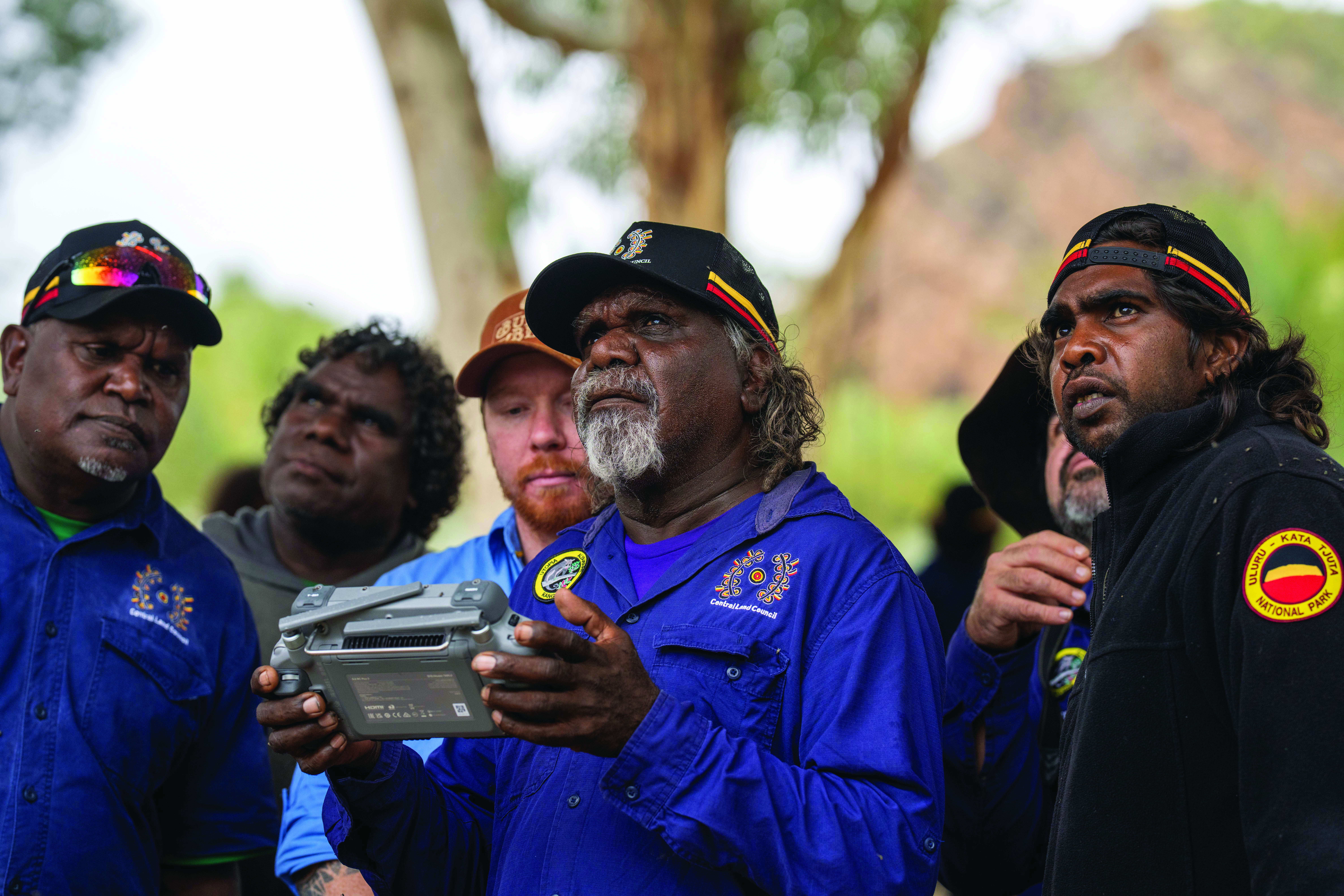
The Country Liberal Party government’s decision to break its $12 million Aboriginal ranger grant election promise is putting jobs, cultural knowledge and land management at risk across the Territory.
“The CLP is making a habit of betraying the trust of Aboriginal people,” CLC chair Warren Williams said.
“This is a slap in the face of the rangers who are out there managing country on the smell of an oily rag, protecting sacred sites and fighting fires, weeds and feral pests in some of the most remote areas of the Territory,” he said.
Former opposition spokesperson for Parks and Rangers Bill Yan, now the NT’s treasurer, said just before last year’s NT election that the CLP would continue Labor’s ranger grants.
He promised to deliver $3 million annually over four years to support Aboriginal rangers with critical training, equipment and infrastructure upgrades and job security – exactly as the previous Labor government had done for eight years.
Paddy O’Leary, the chief executive of Country Needs People, counted on him to keep his word.
“We were actually shocked that a government would so clearly promise, very directly, to fund a specific program unambiguously and without conditions, and then turn around in their first budget and break that promise,” Mr O’Leary said.
He said the backflip means rangers across the Territory won’t be able to afford the repairs, spray packs and protective equipment they need to do the job.
The CLC employs more than 90 rangers across 14 groups.
Mr Williams said their work “benefits all Territorians – from tackling feral pests to reducing carbon emissions – and the government’s broken promise puts this work and these jobs in jeopardy”.
Top End rangers are “outraged at this broken promise”, Northern Land Council chair Matthew Ryan said, adding that they were already significantly under-resourced to properly manage land and sea country.
“This government has revealed its plans to leave Aboriginal rangers behind,” he said.
Much of the Aboriginal ranger programs are funded by the federal government, but the ranger grants of the NT government have made the difference between groups limping along and thriving.
“Rangers will definitely scale back some of their activities, such as fighting weeds and tackling buffel grass, protection of sacred sites, which will mean fewer jobs on the ground,” said the CLC’s ranger program manager, Boyd Elston.
“Fewer opportunities for communities that really don’t have many other opportunities.”
“We were really shocked that the government would cut that kind of investment with so many positive outcomes. Kids want to be rangers and have the opportunities to move into those positions.”
NT environment minister Joshua Burgoyne said funding had been exhausted.
“Our government’s number one priority is law and order, including spending on frontline priorities such as police, courts and corrections.”
He said the CLP would “continue to work with Aboriginal ranger groups across the Territory to ensure we can support them in their important work moving forward”.
Mr Williams wants nothing less than a full reinstatement of the ranger grants.
“Your fine words before the election about supporting the bush ring hollow when you turn your backs on one of the proven success stories in remote community development as soon as the election is over,” he said.
“Our rangers and the country they care for deserve better. They will remember your backflip, as will voters.”
This is an article from Land Rights News July 2025. Read the full paper here.
A Land Rights News article
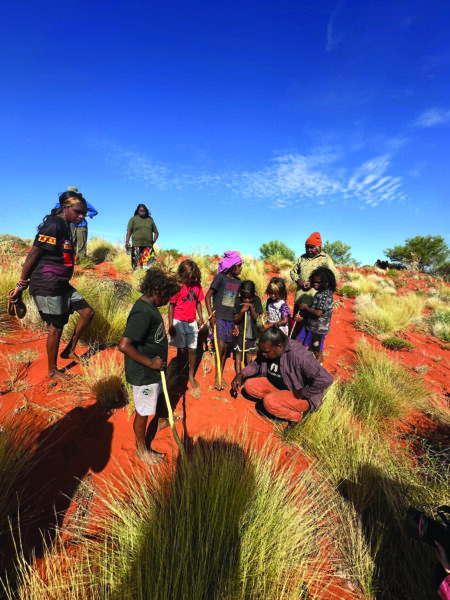
The Central Western Desert Indigenous Protected Area was a long time coming, calling for two days of celebrations.
During one of the hottest March weeks in living memory, hundreds of traditional owners and their supporters gathered at Ilpili, a significant water site in the middle of Australia’s newest IPA.
As their people had for tens of thousands of years, they came from all over the four million hectare area and beyond to perform ceremonies and introduce a new generation to their country.
They also signed an agreement with the Australian government to look after it for all Australians.
The two permanent springs seeping from Ilpili’s limestone make it an important gathering place.
The site lies between Walungurru (Kintore) and Watiyawanu (Mount Liebig), and is Papunya elder Karyn McDonald’s grandmother’s country.
“This is an important sacred place,” she said.
“Last night I was crying because I was remembering how my ancestors used to stay around this area. And it was really difficult, winter season and hot season, to look around for food. When I came here I felt my ancestors whispering to me. I felt my tears,” she said.
“We’re really proud to look after the country, the rock holes, water holes and all the animals, for the kids’ future. For them to learn from us so they can pass it on to the future generations,” Ms McDonald said.
She said feral camels pose the main threat to Ilpili’s springs.
“They just come, drink, have a bath. That’s how they are spoiling our water holes. The rock holes as well. We need to keep our country safe.”
Ms McDonald wants the Anangu Luritjiku and Walungurru ranger groups to “listen to the traditional owners” as they look after country between them, following an IPA management plan.
For the IPA management committee, getting rid of buffel grass and camels is of the utmost importance.
It’s the “main thing” for IPA committee member Patrick Collins, and why he signed up for the Australian Government funds that will flow with the IPA agreement.
“Water first, before we can come and look after country. Camels always smashing all the water. We need someone to help us. That’s why we’re trying to get someone to give us a little bit of money and work with us to look after the water and push all the camels to somewhere else.”
The celebration was the reward for all the work traditional owners and the Central Land Council started in 2017.
“We’re happy today,” Mr Collins, a CLC delegate from Watiyawanu, said after he signed the agreement.
“We’re trying to look after country. We travel around and see all the kids and get all the rangers to work with us to fix my country.”
School kids from his community spent the first morning of the gathering in the sand dunes north of Ilpili, learning how to track animals from kuyu pungu (master trackers) from Kiwirrkurra, Nyirrpi and Yuendumu.
“We want to learn the kids to carry on what we’re doing, so we’re passing story on to the kids and they can pass on the story when they grow up,” Mr Collins said.
“We’ve been learning with our grandmother and father how to catch kangaroo and goanna. We want to learn the kids to track animals, which way the animals are going, which way they are turning, see fresh tracks and old tracks. ‘Oh, we might follow fresh tracks’. So we are following the right track. ‘It must be here, where the fresh track is’.”
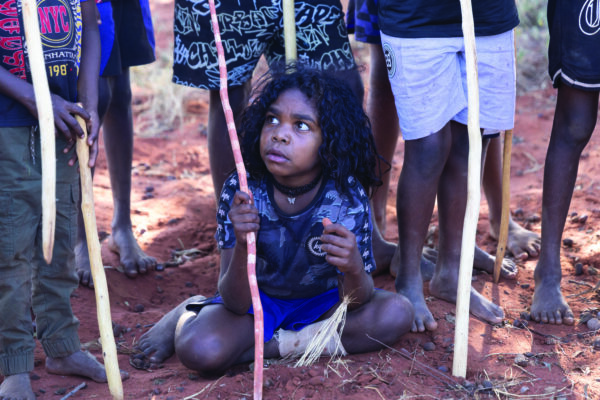
After a couple of hours of tracking in more than 40 degrees heat everyone retreated to whatever shade they could find.
Luritja interpreters helped the kids to relax with kuyu pungu Christine Michaels Ellis, her mum Alice Henwood and Enid Gallagher, who talked to them in Warlpiri.
“I was really happy with these kids,” Ms Michaels Ellis said.
“We asked them to recount. That’s what we always do with our rangers. They recounted back to us what they had seen today – snakes, camel tracks, fox tracks, sand goanna, scorpion burrows and centipedes, and old cat tracks as well. And they were really happy. It was really great.
“I told them tracking is really important so they can pass on the knowledge from the old people. Without the elders there will be no more tracking, so they have to pass knowledge to the young people.”
Students from across the IPA prepared for the big day by practising purlapa (ceremony) with the elders, and some carved and painted their own small digging sticks.
The rangers of tomorrow visited rock holes to learn from elders and scientists how to test the water quality and keep them clean.
“If they become a ranger they can learn their kids,” Ms Ellis Michaels said.
“If they haven’t got songlines they have to record it. That’s what Warlpiri people do at Yuendumu. They get records from the old people, and take it to PAW [Pintupi Warlpiri Anmatyerr Media], and they save it.”
With precious cultural knowledge and nine threatened animal species to protect on the IPA, the rangers have their work cut out.
Those who have to make it all happen feel up to the task.

“We’ve got the princess parrot, the (central) rock rats, and we’ve got the great desert skink in these areas, but there’s so many other more projects that we have planned,” the coordinator of the Papunya-based Anangu Luritjiku Rangers, Lynda Lechleitner, told the ABC.
“This IPA gives us our own voice and brings all the communities together in managing our land,” she beamed.
“It’s also going to make it faster to deliver our work on the ground because we are all working towards the same plan.”
The IPA program is an Australian government initiative that has helped Aboriginal people look after the unique natural and cultural values of their land since 1997.
Under the Central Western Desert IPA agreement the CLC will receive approximately $1.7 million for four years to help traditional owners and rangers to protect country and culture.
This is an article from Land Rights News July 2025. Read the full paper here.
A Land Rights News article
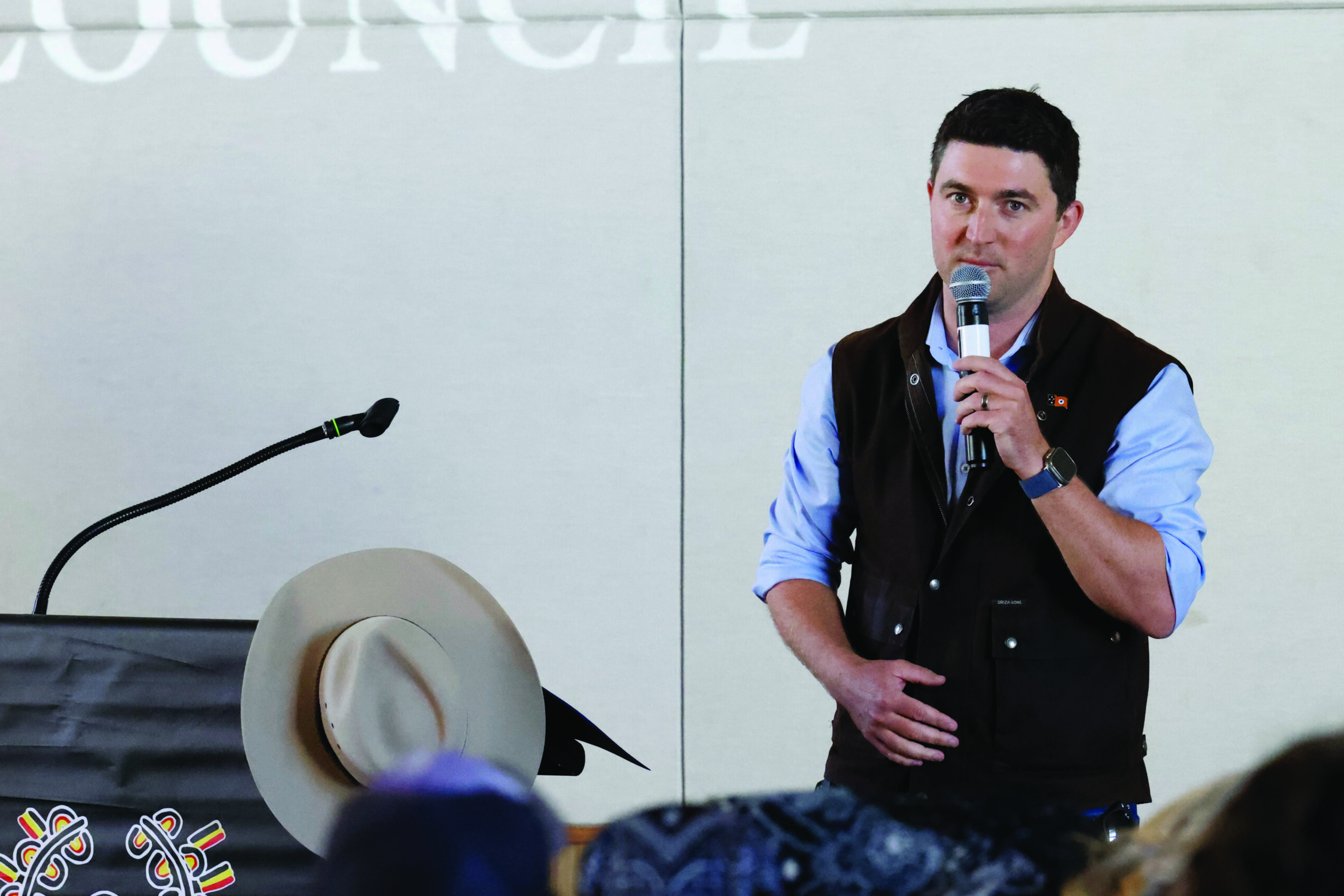
The Country Liberal Party government has weakened sacred sites protections, breaking promises to the members of the Central Land Council.
The government rushed changes to the Territory’s sacred sites law through the parliament on 16 May, despite NT environment minister Josh Burgoyne’s promises to the council only weeks earlier.
The cattle and mining industries welcomed the changes, which mean that the certificates that set out the conditions for works carried out near the sites can now be transferred or have additional parties added – all without asking the sites’ traditional owners.
CLC chair Warren Williams wrote to the minister before the changes passed, reminding him that he told the CLC’s April meeting at Yulara that “you would keep talking with us”.
At the meeting, members disagreed with the minister’s claim that the proposed changes would “strengthen” the protection of sacred sites.
They demanded he properly consult traditional owners about the changes before passing them.
Mr Burgoyne told them he would do so and that the certificates would only be transferred for “the exact same work” as that covered by the previous certificate.
He said that traditional owners would be the ones who decide about ‘enforceable undertakings’ – where sacred site damage results in fines or remediation work rather than ending up in court.
He also said he would look into how traditional owners would be compensated if a site is damaged instead of the fine going to the government.
After the meeting Mr Williams wrote to the minister twice, seeking to hold him to these promises.
“I hope that you will be a man of your word,” he wrote.
Yet the changes the government rushed through parliament did none of this.
They include deliberately unclear wording.
For example, they say certificates can be transferred and include additional parties as long as the proposed work and use of the land are the same.
“‘Use of land’ is very vague,” Mr Williams wrote in the letter.
“Mining is a ‘use of land’, but a mine can be big or small and the conditions needed to protect sacred sites could be very different.”
His letter included a list of suggested improvements to the sacred sites law, all of which the government ignored.
His most important request was to not amend the law without the prior informed consent of the four Territory land councils and the board of the Aboriginal Areas Protection Authority.
AAPA, the body overseeing the protection of sacred sites, also complained about the government’s lack of consultation.
“The Sacred Sites Act is meant to protect Aboriginal sacred sites, but Aboriginal people and their representative organisations have not been consulted on these changes,” AAPA chair Bobby Nunggumajbarr said.
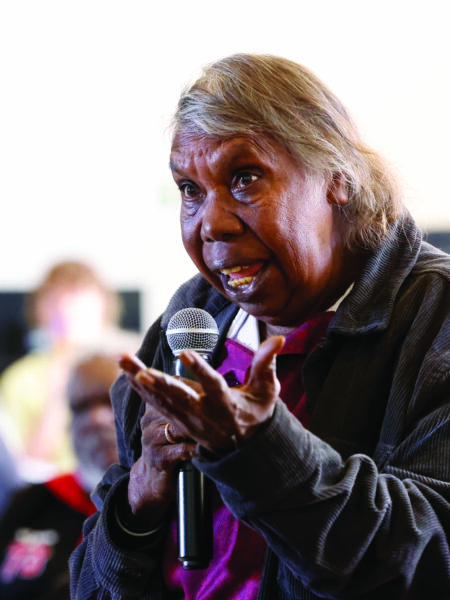
AAPA said the Territory government had missed a crucial opportunity to modernise and strengthen the law and that the changes raised “many questions” about the government’s motivation as it “rush[es] through” amendments with just one week’s notice.
AAPA is worried about transfers of its certificates between proponents, and adding third parties without consultation with the traditional owners, particularly in relation to a proposed hotel development at the Darwin waterfront.
NT Labor accused the government of changing the sacred sites laws to help the hotel development go ahead.
Labor’s Chansey Paech said the bill “exists solely to clear the pathway” for the hotel.
“Nothing more, nothing less,” he said.
This is an article from Land Rights News July 2025. Read the full paper here.
A Land Rights News article
The native title holders and other traditional owners threatened by the massive Singleton Station water licence have asked the Central Land Council to take their fight for their water rights to Australia’s highest court.
Meeting with the CLC’s chief executive Les Turner in Tennant Creek, they said they want to start legal action in the High Court in Canberra as soon as possible.
The CLC agreed to represent the Mpwerempwer Aboriginal Corporation in its case against the 40 gigalitre licence – the largest amount of water the Territory has ever given away free of charge.
The desert region’s native plants, animals and sacred water sites depend
on this groundwater.
“I am worried about this station,” elder Ned Kelly told the meeting. “This Mpwerempwer is a powerful place. It covers all this area. It is a powerful story there.”
He is counting on the CLC to help the native title holding body for the station, to continue its long fight against the licence.
“CLC that’s the only way we can get it, they are fighting for us. We have to keep on fighting.”
“They have said many times that they will never stop fighting against the licence that threatens their sacred sites and their communities’ water security,” CLC chief executive Les Turner said.
“So we’ll consider all avenues open to them now.”
The native title holders also decided to take part in an assessment of the environmental impact of the company Fortune Agribusiness’ plans to grow fruit and vegetables for overseas markets.
The NT Environmental Protection Agency will check whether the company’s plans to protect dozens of sacred sites, hunting and gathering grounds and other important stories and places on Singleton are good enough.
Before that assessment is finished, the company is not allowed to use the licence to extract groundwater.
The native title holders hope that, if the agency investigates properly, it will see that the damage from the licence will be too big and the NT government will deny the company the environmental approvals.
Mr Kelly’s grandson Brian believes the stakes are simply too high to leave any stone unturned.
“If this goes ahead, there will be nothing there when we go look around,” he said.
“We need to think about future generations,” elder Michael Jones said, reminding everyone that remote communities in the region have struggled for water before.
“We moved to Alekarenge because there was no water. Old people carted water from Seven Mile to town. We don’t want that to happen to our next generation. Where will our young ones go?”
Mpwerempwer’s decision not to give up comes after the NT Supreme Court dismissed its appeal against the licence.
The judges ruled in May that the NT government did not have to follow the Western Davenport Water Allocation Plan when it gave the licence and that it can leave important regulations for later.
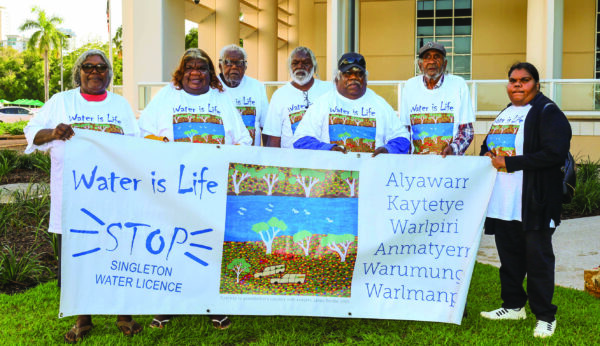
They also said the government did not need to talk to Mpwerempwer and the CLC about sacred site protection conditions in as much detail as it talked to the company about those conditions.
A High Court appeal against this decision and the EPA assessment are not the only things on the minds of the traditional owners.
Mr Jones is worried that the new Territory Coordinator, an unelected NT bureaucrat with vast powers, could try to intervene.
“That Territory Coordinator, he won’t listen to anyone. He doesn’t need to talk to anyone, doesn’t need to talk to traditional owners,” he said.
The Territory Coordinator has to consider economic development before everything else.
Fortune Agribusiness has promised to create lots of jobs and money for the NT, but experts say these claims are greatly exaggerated.
More than five years after the traditional owners first spoke up against the Singleton water licence, their battle continues.
This is an article from Land Rights News July 2025. Read the full paper here.
A Land Rights News article

Federal government funding for the Northern Territory should be withheld until an independent commission investigates police conduct in Yuendumu’s latest death in custody.
The Central Land Council chair, Warren Williams said the NT was the only state or territory that does not have an independent body to investigate police conduct. As a result, the NT has failed to overhaul the culture of its police force.
Mr Williams, who lost two loved ones in one week, called on the Federal government to cease NT funding until it agreed to set up an independent 12-month inquiry, led by the NT Coroner to investigate the death of Kumanjayi White.
He said the investigation must target officers with a history of complaints and racist attitudes.
Mr William’s nephew Kumanjayi White died in police custody in Alice Springs during National Reconciliation Week.
Later in the week a respected 68-year-old Wadeye elder, who studied teaching with Mr Williams at the Batchelor Institute, died in hospital following his arrest at Darwin airport.
Mr Williams said the fact that the NT police have no independent oversight makes the desolation and sorrow gripping his community so much harder to bear.
“The NT government receives a lot of federal funding to address the inequality our people suffer. That funding must not be used for systems that hurt us.”
Letters from around 800 Territorians and calls by community leaders, legal experts and politicians for an investigations at arms length from the NT police have been dismissed by chief minister Lia Finocchiaro as “uneducated”.
“She understands my community needs confidence in the police, and that trust has been eroded.”
He also acknowledged “all the good people who gathered in sorrow and solidarity”.
A national wave of grief and outrage started with a vigil and smoking ceremony at the Coles supermarket in Alice Springs, where Kumanjayi took his last breaths in the lolly aisle, reportedly with an off-duty policeman’s knee on the back of his neck.
Mr Williams does not believe the protests will change the minds of the NT government.
“Let me be clear: Only money will force the NT government to act. Our lives are worth less than a chocolate bar to those in power and money is the only language they understand.”
He called for Ms McCarthy to respond quickly. “I hope the minister supports our request and ensures the coroner is well-resourced so they can conclude their inquest within a year,” he said.
CLC chief executive, Les Turner asked how this death could happen, more than 30 years after the Royal Commission into Aboriginal Deaths in Custody recommended that complaints against police be investigated by an independent body.
“That an alleged shoplifting attempt by a cognitively impaired person ended in his death tells us that, tragically, too little has been learnt from the past.”
The Country Liberal Party government has been in office for less than a year and has already broken multiple promises to Aboriginal communities, while the CLC remains very concerned about the rates of incarceration and child removals.
“We don’t trust this government and its police force to keep us safe,” Mr Williams said.
“NT police talk of reform and anti-racism strategies is just that – talk. It’s time for the federal government to hold the NT accountable and force the change we so desperately need.”
This is an article from Land Rights News July 2025. Read the full paper here.
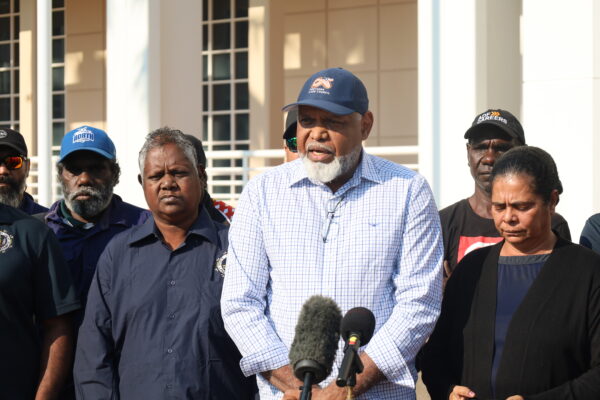
The four Northern Territory land councils have gathered for the first time since 2020 to warn against making decisions about their people – more than a third of the NT’s population – without them.
Meeting in Darwin, the executive committees of the Northern, Central, Tiwi and Anindilyakwa land councils have reminded decision makers that they are strong together and here to stay.
“Many people come and go. Our people are not going anywhere,” Matthew Ryan said.
“Economic growth can only happen in genuine partnership with our people.”
“Federal funding for our people props up the NT’s budget. The Australian government needs to hold the NT government accountable and make sure its laws and policies match the intent of that funding – to help our communities,” said Mr Ryan.
“Between us we own more than half of the Territory’s land and 85 per cent of the coastline. Any government that ignores and harms our fast-growing population may win an election or two, but it has no future,” TLC chair Leslie Tungatalum added.
The 650 Aboriginal corporations in the NT benefit all Territorians by offering skilled jobs and economic development on country.
Aboriginal people manage vast areas for national security and biosecurity, creating industries such as tourism, fisheries and aquaculture.
In 1976 the federal government set up the NT land councils with statutory powers and functions to support Aboriginal decision-making about land and waters.
They have a strong record of facilitating consensus and informed consent across groups that creates the certainty needed for all Territorians to thrive.
ALC chair Cherelle Wurrawilya said the land councils will not be sidelined.
“Everyone will suffer if governments keep punishing and neglecting our people, but we will all gain when governments work with us. Just look at the big drop in crime we achieved on Groote Island since we took control of delivering justice.”
The NT’s justice and police racism crises were high on the agenda of the joint meeting.
The land councils called for an independent police misconduct body and for the publication of an implementation plan based on all the recommendations of the Kumanjayi Walker Coronial Inquest.
“The findings and recommendations of the inquest must inform the NT Police Anti-racism Strategy, even if this delays the release of the strategy,” CLC chair Warren Williams said.
“There must be full public consultation of the review of the Youth Justice Act.”
Mr Ryan said the land councils want to co-design the terms of reference of an independent inquiry into structural racism in the NT police force, alongside other representative Aboriginal organisations.
“We want a working group of relevant agencies to develop and implement better procedures to address complaints by Aboriginal people about police racism and use of force – a group that consults with the land councils and affected families and communities.”
The four executive committees also vowed to fight for Aboriginal water rights like their old people fought for land rights.
“We want the federal government to strengthen the National Water Agreement, extend the water trigger in federal environment laws to all thirsty industry proposals and keep funding remote community drinking water projects,” said Mr Williams.
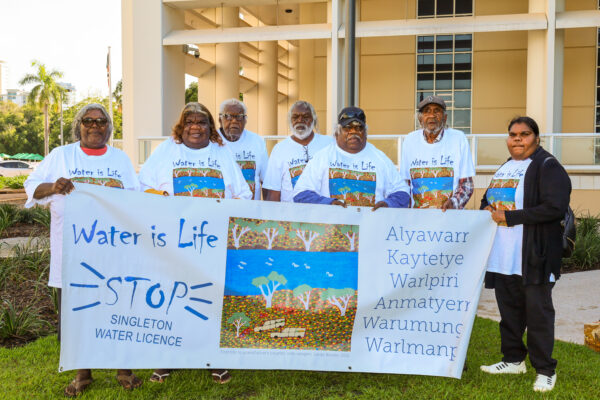
The native title holders and other traditional owners threatened by the massive Singleton Station water licence have asked the Central Land Council to take their fight for their water rights to Australia’s highest court.
The Mpwerempwer [pronounced emPUrra-empurra] Aboriginal Corporation is asking the High Court to hear an appeal after its members, the native title holders for Singleton Station, told CLC chief executive Les Turner they want to start legal action in the High Court.
The CLC will represent Mpwerempwer in its case.
The 40 gigalitre licence is the largest amount of water the Territory has ever given away free of charge – groundwater the desert region’s native plants, animals and sacred water sites depend on.
“I am worried about this station,” elder Ned Kelly told him at a meeting in Tennant Creek in late May.
“This Mpwerempwer is a powerful place. It covers all this area. It is a powerful story there.”
He is counting on the CLC to help the traditional owners to continue their long fight against the licence.
“CLC that’s the only way we can get it, they are fighting for us. We have to keep on fighting.”
“The traditional owners have said many times that they will never stop fighting against the licence that threatens their sacred sites and their communities’ water security,” Mr Turner said.
“The appeal is one of the avenues open to them.”
The native title holders also decided to take part in an assessment of the environmental impact of Fortune Agribusiness’ plans to grow fruit and vegetables in the desert, for overseas markets.
The Northern Territory Environmental Protection Agency will assess whether the company’s plans to protect dozens of sacred sites, hunting and gathering grounds and other important stories and places on Singleton are adequate.
In the meantime, the company is not allowed to use the groundwater under the licence.
The native title holders hope to demonstrate to the agency that the licence will damage too many sacred sites and environmental values, and recommend to deny the company the environmental approvals.
Mr Turner said the native title holders believe the stakes are simply too high to leave any stone unturned.
“They told me that if the licence goes ahead, their precious groundwater-dependent sites will disappear, leaving them with nowhere to teach their young people and carry on their ceremonies,” he said.
Mpwerempwer’s decision not to give up comes after the NT Court of Appeal dismissed its appeal against the licence in May.
More than five years after the traditional owners first spoke up against the Singleton water licence, their battle continues.
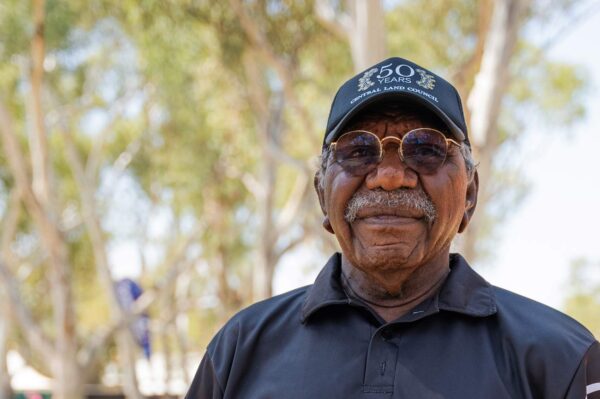
The Central Land Council has called on the federal government to withhold funding from the Northern Territory government until it sets up an independent police conduct commission and adequately resources an independent inquiry led by the NT Coroner, to be concluded within 12 months.
“Unlike most jurisdictions, the NT lacks a body to investigate police misconduct and has failed to overhaul the culture of its police force,” CLC chair Warren Williams said.
The CLC chair, whose nephew Kumanjayi White died in police custody during Reconciliation Week, said the measures must target officers with a history of complaints and racist attitudes.
Mr Williams said the lack of an independent oversight over the police magnifies the desolation and sorrow gripping his community.
“I thank Minister McCarthy for her support of an independent inquiry. She understands my community needs confidence in the police and that trust has been eroded,” he said.
“My heart goes out to my community and all the good people who gathered in sorrow and solidarity at vigils in Alice Springs and Sydney.
“But let me be clear: only money will force the NT government to act. Our lives are worth less than a chocolate bar to those in power and money is the only language they understand.”
In the meantime, he said, an independent inquiry into his nephew’s death has to be held without delay.
“I hope the minister supports our request and ensures the coroner is well-resourced so they can conclude their inquest within a year,” he said.
The Country Liberal Party government has been in office for less than a year and has already broken multiple promises to Aboriginal communities, while the CLC remains incredibly concerned with the rates of incarceration and child removals.
“We don’t trust this government and its police force to keep us safe,” Mr Williams said.
“NT police talk of reform and anti-racism strategies is just that – talk. It’s time for the federal government to hold the NT accountable and force the change we so desperately need.”
Mr Williams is attending sorry business in Yuendumu and unavailable for interviews.
Governance Story for Aboriginal Corporations
Governance Story for Aboriginal Corporations
Governance Story for Aboriginal Corporations
Governance Story for Aboriginal Corporations
Governance Story for Aboriginal Corporations
Governance Story for Aboriginal Corporations
Governance Story for Aboriginal Corporations
Governance Story for Aboriginal Corporations

The Central Land Council will host directors of native title holder corporations for its fourth Prescribed Bodies Corporate Camp from 20 to 22 May 2025 at the Ross River Resort, east of Alice Springs.
A highlight of this year’s camp will be the launch of the CLC’s new Governance Story series—eight plain English, illustrated booklets developed with the directors in response to their feedback from the 2021 PBC Camp.
The booklets break down complex governance topics such as meeting procedures, decision-making, financial and risk management and strategic planning.
“We were very happy to help make these books,” said Vanessa Napaltjarri Davis, a director of the Rodinga and Ngalyia Aboriginal corporations, two native title bodies corporate.
“We looked at every picture and read every sentence to make sure the books would help us explain good governance in easy English to our mob.”
Camp participants will receive a full set of the books, which will also be available on the multi-lingual PBCmob app from 26 May—an initiative of an earlier PBC Camp.
Around 100 directors and representatives from 36 registered native title bodies corporate across central Australia are expected at the camp.
The camp is a unique opportunity for delegates to understand their native title rights and interests, share experiences, and connect with government agencies and support organisations.
The program features presentations and workshops from the National Indigenous Australians Agency, the National Native Title Council, the Australian Law Reform Commission, the Aboriginal Areas Protection Authority and the Office of the Registrar of Indigenous Corporations.
There will be hands-on sessions on how to understand and amend corporation constitutions, and on enterprise development.
The NT Cattlemen’s Association will return to the camp to discuss ongoing issues about native title holder access to pastoral lease land.
“This camp is not just an opportunity for PBC directors to learn about their native title rights and good governance,” said CLC native title manager Francine McCarthy.
“They also tell us how we can support them better, and we follow through on their feedback. The Governance Story booklets are a great example of that.”
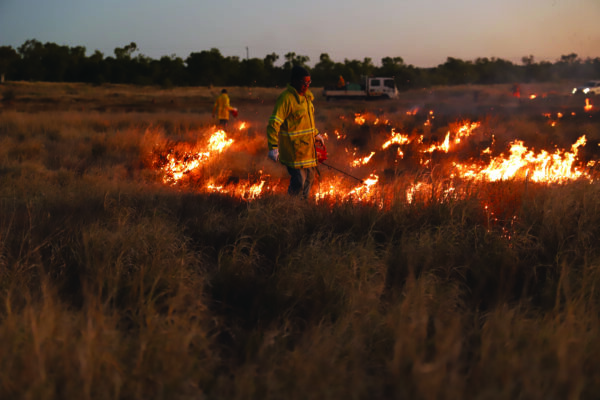
The Central Land Council condemns the Northern Territory Government’s decision to backflip on its $12 million Aboriginal Ranger Grants election promise.
“The CLP has betrayed our trust and puts jobs, cultural knowledge and land management at risk,” CLC chair Warren Williams said.
Before the 2024 election, the Country Liberal Party promised to deliver $3 million annually over four years to support Aboriginal ranger groups with critical training, equipment and infrastructure – a commitment it has now scrapped in this week’s budget.
“This is a slap in the face to the rangers who are out there managing country on the smell of an oily rag, protecting sacred sites and fighting fires in some of the most remote areas of the Territory,” he said.
“Aboriginal ranger programs benefit all Territorians – from tackling feral pests to reducing carbon emissions – and the government’s broken promise puts this work and these jobs in jeopardy.”
The CLC supports 15 ranger groups across Central Australia, employing more than 90 Aboriginal rangers. The promised funding would have supported critical training, equipment upgrades and job security.
“This broken promise hits especially hard in communities where ranger jobs are among the few opportunities for meaningful, culturally appropriate work,” Mr Williams said.
“It undermines decades of investment in local efforts to look after country.”
Mr Williams called on the government to honour its promise and reinstate the grants in full.
“Your fine words before the election about supporting the bush ring hollow when you turn your backs on one of the proven success stories in remote community development as soon as the election is over,” he said.
“Our rangers and the country they care for, deserve better. They will remember your backflip, as will voters.”
The Central Land Council has pledged to work closely with the Albanese government in its second term to progress the commitments in the National Agreement on Closing the Gap.
The CLC welcomes Prime Minister Anthony Albanese’s commitment in his election night speech to supporting the empowerment of First Nations people “because we will be a stronger nation when we close the gap between Indigenous and non-Indigenous Australians”.
“I congratulate Prime Minister Anthony Albanese and look forward to meeting him and the Minister for Indigenous Australians to ensure everything that can be done is being done with respect to the sky-high cost of living, lack of real jobs and overcrowded and dilapidated houses,” chair Warren Williams said.
“Residents urgently need relief from high grocery, fuel, electricity, and transport costs, along with a substantial increase in the remote area allowance, which has not been adjusted in 25 years”.
Through its membership in the Coalition of Peaks and Aboriginal Peak Organisations NT, the CLC will continue to support resetting the National Agreement on Closing the Gap to address the Productivity Commission and Aboriginal and Torres Strait Islander led reviews.
The CLC also welcomes the treasurer’s commitment to finalising a First Nations Economic Empowerment Partnership with the Coalition of Peaks, which needs to focus strongly on building blocks such as employment.
At the same time, the CLC wants to see a significant shift in the policies and programs surrounding remote employment services, focusing on job creation, strengthening community control and ensuring greater accountability and reporting.
Introducing 3,000 jobs through the Remote Jobs and Economic Development program is an important part of the reform effort and a welcome first step. Clearly, more jobs are needed to support approximately 40,000 people who will not get a job through the current RJED program.
The CLC looks forward to working constructively with Prime Minister Anthony Albanese and Minister Malarndirri McCarthy to progress Indigenous policy priorities.
“Together, we hope to strengthen outcomes for our communities, support self-determination, and ensure Aboriginal voices continue to shape the decisions that affect our lives,” said Mr Williams.
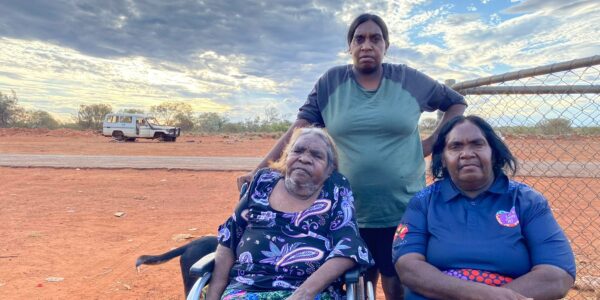
The traditional owners of land near Canteen Creek in the Northern Territory will gather on Wednesday 16 April to celebrate the handback of country they first claimed more than four decades ago.
The Central Land Council lodged the original Wakaya-Alyawarre Land Claim 42 in 1980. Since then, the traditional owners have received two of three portions of the claimed area and agreed to withdraw the township of Canteen Creek from the claim.
They have waited ever since for the rest of their country to be returned.
To finally settle the Wakaya-Alyawarre (Repeat) Land Claim No. 130, traditional owners consented to an agreement between the CLC and the Northern Territory Government to surrender their native title rights to the Canteen Creek community.
After years of consultation, the Indigenous Land Use Agreement was supported by both the traditional owners and the Canteen Creek community. The CLC’s elected members certified the agreement on 30 October 2019.
Under the agreement, the Canteen Creek Landholding Aboriginal Corporation, run by residents and traditional owners together, will receive freehold title to parts of the community. The rest of the claim area will be granted as Aboriginal freehold land under the Aboriginal Land Rights (Northern Territory) Act 1976.
Eileen Bonney, the most senior surviving claimant, is happy to be alive to see the handback ceremony finally happening on her family’s homeland, just north of Canteen Creek.
“I’m feeling happy to get this title. I waited a long time when I was young. I kept talking and kept fighting until I got old. And now it’s going to happen,” she said.
“This handback honours the determination and strength of the traditional owners who never gave up on their claim,” said CLC chief executive Les Turner.
“It’s a moment to celebrate and reflect on the sacrifices of those who didn’t live to see this day. We recognise their legacy and the leadership of the families who have carried this claim forward.”
The Minister for Indigenous Affairs, Malarndirri McCarthy, will present a framed copy of the title deed to the traditional owners, officially handing back the land to its rightful owners.
Traditional owners will celebrate the event by performing a traditional dance and cutting a cake to mark the occasion.
The Wakaya-Alyawarre (Repeat) claim is one of the CLC’s final two land claims under the Land Rights Act. Over its 50-year history, the CLC has helped traditional owners win back more than half the land in the southern half of the Northern Territory and continues to support them to manage it through its 14 Aboriginal ranger groups.
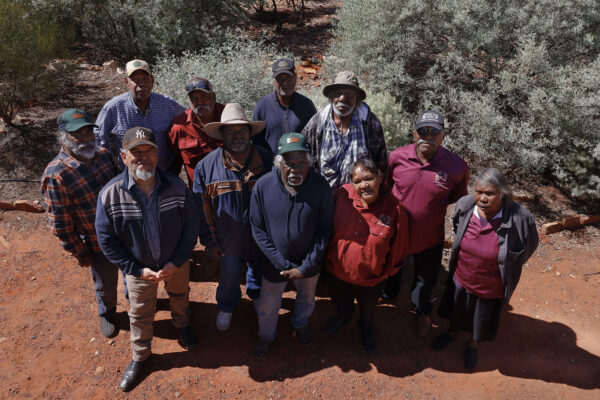
The Central Land Council calls on the Northern Territory Government to respect Aboriginal people and due process by stopping the Sacred Sites Legislation Amendment Bill pending proper consultation with traditional owners.
It also asked Minister Josh Burgoyne to confirm during this consultation process some promises he made during his discussion with the council today.
“We strongly urge you to bin this bill and co-design a consultation process with the land councils so you can take into account the views of Aboriginal traditional owners and reflect the commitments you made today,” CLC chair Warren Williams said.
Mr Burgoyne told CLC delegates that traditional owners will decide whether there will be an ‘enforceable undertaking’ or a prosecution where a site has been damaged and that sacred site clearance certificates will only be transferred from one developer to another if the scope of a project is exactly the same as in the original certificate.
The proposed bill does not include these commitments.
The minister also agreed to “keep talking”. The delegates welcomed this and resolved to hold him to his commitments.
They told him that the NT land councils have long advocated for the recognition of their sacred sites processes and how to strengthen the Territory’s sacred sites law.
“The Country Liberal Party’s fast tracked amendments are designed to please land users and developers, but sideline us completely,” Mr Williams said.
“We are outraged because our sacred sites mean the world to us, and it’s our duty to protect them and not just take the government’s word on trust.
“Our sites belong to us, not the government, and it should not change the law protecting our sites without our informed consent.”
CLC processes and approvals guarantee to developers that the right people have been consulted and that approved projects won’t land them in court.
A co-designed bill would streamline the process by recognising land council sacred site clearance certificates that traditional owners and proponents often prefer because they provide certainty and save costs.
Mr Williams said the Territory will not be able to deliver certainty to developers or achieve lasting positive legislative and policy outcomes by cutting corners at the expense of Aboriginal people.
“Despite the unholy rush of the government we have made a submission that builds on our earlier submissions and includes the amendments to the bill that are important to us.”
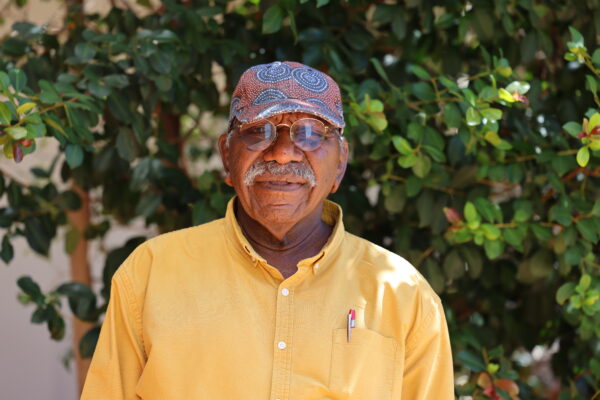
The Central Land Council has re-elected Warren Williams as CLC chair and Barbara Shaw as deputy chair at its meeting at Yulara today.
Mr Williams, a retired assistant Yuendumu school principal, thanked the CLC’s 90 community representatives for the faith they have placed in him for the second time.
“It’s the delegates that put me in as the chair. They are doing a lot of work in our communities and they put their trust in me,” he said.
Mr Williams has twice been a CLC deputy chair, represents Warlpiri communities on the Central Desert Regional Council and chairs Yuendumu’s Yapa Kurlangu Ngurrara Aboriginal Corporation.
He continues to help men overcome problems with domestic violence and to mediate community conflicts across the southern Tanami region.
He called on politicians to visit remote Territory communities if they are in any doubt about the sky-high cost of living, lack of real jobs and overcrowded and dilapidated houses.
“They should get out of their offices and look at the state the houses are in out in our communities,” he said.
“We need to see more young people training and working in our communities and on roads. Our roads need lots of work.”
He said residents need urgent relief from the exorbitant grocery, fuel, electricity and transport costs, as well as a substantial increase in the remote area allowance for the first time in 25 years.
“It really does matter. It’s alright for people in cities to complain about the cost of living. Come to our communities and see how much we have to pay. We pay twice what they pay, yet we have the lowest incomes.”
The CLC’s deputy chair since 2019, Ms Shaw works with the Tangentyere Family Safety Group that targets family violence in Alice Springs town camps.
She also chairs Aboriginal Investment Northern Territory.
“Our land councils and our rights are under attack again and I am ready to support our members and our chair in this fight,” she said.
This afternoon the CLC delegates will elect the remaining nine members of council’s executive committee.
The CLC election is carried out by the Northern Territory Electoral Commission.
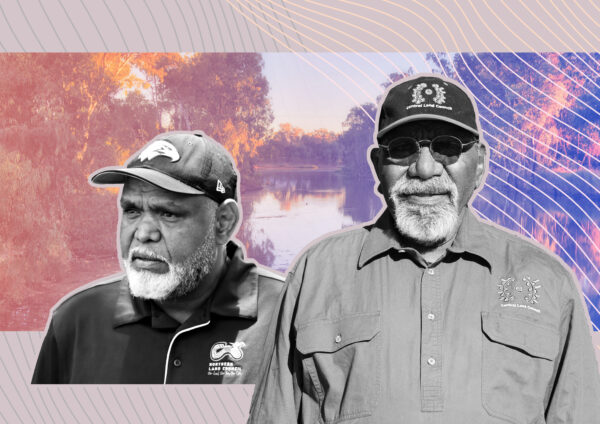
Traditional owners are united in calling out the Territory government’s ill-conceived and rushed changes that move it ever closer to an anti-democratic regime pursuing development at any cost.
Giving away our precious water to foreign and interstate interests deprives our people of development opportunities today and robs all Territory children tomorrow.
This government cannot be trusted.
Its latest attack on water rights is a bill designed to rip Aboriginal water reserves out of Aboriginal hands.
These reserves are small portions of water set aside in water allocation plans for Aboriginal people to use for trade or economic development.
Combined with the imposition of an all-powerful, unelected Territory co-ordinator, the assault on sacred sites protection and the removal of Territorians’ rights to seek merits review of government decisions, this proposal demolishes the integrity of the Territory government.
We had worked in good faith with the previous Labor government to make Aboriginal water reserves work for our people.
We had agreed a process with the NT Division of Water Resources for negotiating informed consent which was about to go to cabinet before last year’s election.
As with all land council processes, it would have given certainty to developers that the right people have been consulted and guaranteed that approved projects won’t land them in court.
Last week, and again without consultation with traditional owners, the Country Liberal Party government scrapped this in favour of another rushed bill that will create great uncertainty.
The bill removes traditional owners from decisions about the Aboriginal water reserves and hands that power to the Territory water controller.
This bureaucrat would decide who is an “eligible” Aboriginal person to apply for water in the reserve or whether “eligible” Aboriginal people have given consent.
It is completely unclear how he would do this.
What is clear is that the government aims to sideline the NT land councils that were set up with the sole mandate to support Aboriginal decision-making and which have a successful record of facilitating consensus and informed consent across groups that creates certainty.
Its proposed bill exposes developers to legal challenges and loss of their social license.
It undermines Aboriginal people’s hard-won collective rights and decision-making practices, threatens community harmony and removes guardrails against exploitation and corruption.
The scrapping of the standard democratic process of third-party merits reviews has removed the right of any Territorian to check that government decision-making is of an acceptable standard.
Third-party merits reviews hold governments accountable to all citizens, not just wealthy investors.
Coupled with a lack of solid evidence about Territory water resources the government’s latest bill ushers in chaos, conflict and increasing inequality.
Quotes from CLC and NLC chairs
“Instead of giving industry the confidence to invest in the Territory, the proposed changes will see traditional owners challenge dodgy decisions in court, development proposals embroiled in community conflict and investors fighting accusations of corruption,” said CLC chair Warren Williams.
“By contrast, our council’s consultation processes have true integrity and deliver the certainty industry needs.”
“These changes are divisive. The NT Government is opening the floodgates for industry to exploit the Aboriginal Water Reserve for profits,” said NLC chair Matthew Ryan.
“The constant attacks on Aboriginal self-determination are exhausting and insulting. They need to stop.”

The Central Land Council has condemned the Territory government’s latest attempt to rush through ill-considered changes to laws that will threaten traditional owners’ rights and interests – without consulting them.
Late on Thursday afternoon the CLC executive members and representatives of the other NT land councils met with Minister Josh Burgoyne to find out about mooted amendments to the NT’s Sacred Sites Act.
“We asked for information, he gave us platitudes. He disrespected us and treated us like little children,” said CLC chair Warren Williams.
“He asked us to simply accept that the government’s intentions behind the changes are good. He wouldn’t give us any details about the changes or how they would work. All he had was empty talk. No wonder we are all very alarmed.”
“Do not believe him if he tries to pass off this cynical tick-a-box exercise as ‘consultation’ with the land councils.”
The CLC is concerned the government will rush the changes through parliament without leaving sufficient time for land councils to consult their membership.
“Sacred sites belong to us, not the government, and it should not change the law protecting our sites without consulting traditional owners and native title holders,” Mr Williams said.
“This is not how informed consent works.”
The CLC asked the minister for adequate time to consult with traditional owners about the proposed changes before they are rushed through the parliament.
“He refused to give us this commitment,” Mr Williams said.
“The government needs to stop this rushed process and take time to consult with the people whose culture will be affected by it.”
The Central Land Council’s executive committee asked everyone to join them on a community march next week against domestic and family violence.
Meeting in Mparntwe (Alice Springs) today, the 11-member executive discussed the coroner’s report into the deaths of four Northern Territory Aboriginal women.
“These four women’s stories are a heartbreaking reminder of the ongoing violence against our women, who face alarming rates of domestic and family violence,” CLC chair Warren Williams said.
“We thank the coroner for her report and call on everyone to join us on Tuesday 10 December at the ‘End the Silence! Stop the Violence!’ march in Alice Springs.”
“This is a wake-up call for everyone. We must break the cycle of violence, starting with listening to Aboriginal women and taking their concerns seriously.
“Too many lives have been lost, and far too many families continue to live in fear. The time for action is now.”
In May this year the council urged the Northern Territory and Australian governments to:
- Provide the NT with needs-based funding that is desperately needed for prevention and support programs.
- Strengthen efforts to support the targets of the Closing the Gap National Agreement that align with reducing incarceration and improving safety.
- Invest in culturally relevant and meaningful men’s healing programs that support breaking the cycle of violence.
- Support place-based, community-led initiatives that ensure women’s and children’s safety so they can safely remain in their communities.
It also highlighted the vital role men play in breaking the cycle of violence.
“We encourage men to take responsibility for their actions, support one another in choosing non-violent paths, and stand together with women in creating safe and respectful communities,” said Mr Williams.
“We will continue to advocate for stronger protections for our women and children.
“Together, we can honour the memories of the victims by ensuring their tragic deaths lead to lasting change.”
Eileen Bonney, the most senior surviving claimant to the land around a remote Northern Territory community, has welcomed the resolution of a 44-year old land claim “while I’m still living”.
Today the Australian Parliament passed the legislation that settles the claim at long last.
Ms Bonney has been waiting for this day since the Central Land Council first lodged the Wakaya Alyawarre Land Claim 42 in 1980.
Since then the traditional owners won back two small parcels of the original claim area and agreed to withdraw the Canteen Creek township area from the rest.
In order to settle what is now known as the Wakaya-Alyawarre (Repeat) Land Claim No. 130 they consented to an agreement between the CLC and the Northern Territory Government that surrenders native title rights to the township area known as Canteen Creek.
The Indigenous Land Use Agreement is the outcome of exhaustive consultations over many years and has the support of both the native title holders and residents of Canteen Creek.
The CLC’s elected members acknowledged the rigorous and inclusive decision making process by certifying the agreement on 30 October 2019.
The agreement grants ordinary freehold title to some parts of the town to an Aboriginal land holding body, the Canteen Creek Landholding Aboriginal Corporation.
Under the agreement, the NT government also supports the granting of the remainder of the claim area as Aboriginal freehold land under the Aboriginal Land Rights (Northern Territory) Act 1976.
“I am happy to see this settled for my children and all our families,” Ms Bonney said.
“It’s happened at last. I’m still here. I was strong, now I got weaker. I’m still right.
“The traditional owners all wanted to get this done for a long time. Too many of us have died waiting for this day.”
Ms Bonney said the resolution of the claim means her daughters can move to their homeland near Canteen Creek.
She is looking forward to a handback ceremony in the new year.
The Wakaya-Alyawarre (Repeat) land claim is one of the CLC’s last two outstanding claims under the Aboriginal Land Rights Act.
During its 50-year history the council has won back more than half of the land in the southern half of the NT for its traditional owners, and its 14 Aboriginal ranger teams help them to manage the land.
Elke Wiesmann | 0417 877 579 | media@clc.org.au
On Saturday, July 6, the WETT advisory committee won the education category, recognising nearly two decades of support across a range of partnerships and programs that align with Warlpiri education priorities in Yuendumu, Willowra, Nyirrpi, and Lajamanu.
The committee advises WETT on investing gold mining royalties in community-driven initiatives supporting education and training priorities in the four communities.
Maisie Kitson, a retired teacher of 40 years, has been on the WETT advisory committee for 19 years and is one of the strong Warlpiri women who founded the trust in 2005.
Ms Kitson accepted the award on behalf of her colleagues.
“And when we heard ‘Warlpiri Education and Training Trust,’ we all hugged. I was feeling happy and proud. And my tears were coming down,” she said.
Sharon Anderson, an educator from Lajamanu and member of the WETT advisory committee since 2007, accepted the award with Ms Kitson.
“It’s for WETT. It’s been a great achievement all those years of what we have been doing—all the work with the Kurra Directors, community members, and [project] partners. Everyone is getting involved in children’s education. It’s for all Warlpiri,” Ms Anderson said.
“I thought of the Elders, educators and founding [WETT] members who have been guiding us along our journey. And the four Warlpiri communities.”
Many of WETT’s founding members are still on the advisory committee today, and innovative measures are being taken to support new and younger members in joining the committee and growing into these important roles.
WETT is a Warlpiri-controlled and governed initiative administered through the CLC.
The WETT advisory committee, comprising four Warlpiri representatives from the four communities and one each from Newmont and the CLC, plays a crucial role in designing, planning, and monitoring WETT-funded initiatives. This committee meets three times a year and advises the directors of the Kurra Aboriginal Corporation, whose members are traditional owners of the mine site. The Kurra directors, guided by this advice, allocate funding to the WETT programs.
So far, WETT has invested more than $57 million to support Yapa (Warlpiri people) across its five education program areas:
- Children and families
- Language and culture in schools
- Youth development
- Secondary school support
- Learning community centres
Contact: Tess O’Loughlin | 0461 396 054 | media@admin
The members and staff of the Central Land Council are deeply saddened by the passing of the esteemed former Anindilyakwa Land Council chair, Mr T Wurramarrba AO.
“Mr Wurramarrba was a remarkable leader and advocate for his people,” CLC chief executive Les Turner said.
“His unwavering dedication to the Anindilyakwa community and his significant contributions to advancing the rights and interests of Indigenous people will always be remembered.
“Throughout his career, Mr Wurramarrba represented the Anindilyakwa people at all levels of government, always focusing on the future,” Mr Turner said.
Mr T Wurramarrba understood that a strong cultural foundation was essential to self-determination. He retired last month after many years of service to the Anindilyakwa people.
He was at the forefront of ALC’s biggest milestones, including the Groote Archipelago Local Decision-Making Agreement, the establishment of the Northern Territory Aboriginal Investment Corporation and the return of the Groote Eylandt township lease to community control.
Mr T Wurramarrba played important roles on several boards and committees including, Aboriginal Peak Organisation NT, Miwatj Health, and the MJD Foundation. He was also a valuable member of the former ABA Advisory Committee.
In 2013, Mr T Wurramarrba was honoured as an Officer of the Order of Australia for his exceptional service to the Indigenous community of the Groote Archipelago.
“Our thoughts are with Mr Wurramarrba’s family, friends and colleagues, especially those at the ALC,” CLC chair Matthew Palmer said.
“He was a great man who profoundly impacted the people of Groote Eylandt and the wider community. He will be remembered with immense respect and admiration.”
The executive committee of the Central Land Council condemns yesterday’s senseless and shameful behaviour.
Meeting in Mparntwe (Alice Springs) today, the CLC executive called for the perpetrators of yesterday’s disturbance to be held to account.
“It is never ok to frighten residents and damage their property,” CLC chair Matthew Palmer said.
“They have disrespected the native title holders of Mparntwe who have made it very clear how they expect people to behave.”
“Young people should not take matters into their own hands but follow cultural leadership and authority.”
Deputy chair Warren Williams said the peacemakers deserve everybody’s support.
“We commend the Aboriginal leaders and the steps they have taken so far and who are trying to resolve the dispute peacefully.”
“Cultural processes are best dealt with on country, under the guidance of the elders and senior community leaders.”
The CLC will support community leaders to help families resolve the underlying disputes.
Contact: Tess O’Loughlin | 0461 396 054 | media@clc.org.au
Download the PDF
The Central Land Council applauds the unprecedented investment of $4 billion over 10 years in new houses in remote Northern Territory communities.
“Today’s announcement is a most welcome step towards significantly reducing overcrowding in our communities and I congratulate the prime minister for investing in our people,” CLC chief executive Les Turner said.
More than half of the NT’s Aboriginal people live in overcrowded houses. This funding boost will move us much closer to achieving the Closing the Gap target of 12 percent.
“This investment goes beyond building much-needed houses. It has the potential to contribute towards closing the gap in health, education, employment and social outcomes as well.”
“I look forward to considering the detail of the commitment and working with the NT and Commonwealth governments, Aboriginal Housing NT and the other land councils to develop a genuine 10-year partnership agreement.” Mr Turner said.
Today’s announcement will see up to 270 houses built every year for a decade, according to the prime minister.
Contact: Tess O’Loughlin | 0461 396 054 | media@clc.org.au
The Central Land Council is mourning the passing of Dr Lowitja O’Donoghue AC CBE DSG, who died peacefully on February 4 2024, at 91.
She was a proud Yankunytjatjara woman who devoted her life to advocating for and improving the health and well-being of Aboriginal and Torres Strait Islander people.
Dr O’Donoghue played a crucial role in drafting an agreement that laid the foundation for the Native Title Act and worked out the implications of the High Court’s Mabo decision.
According to former CLC Director David Ross, who led what is now the Indigenous Land and Sea Corporation at the time, Dr O’Donoghue was known for her directness when dealing with then Prime Minister Paul Keating. She understood that the High Court had opened a door that could quickly close.
Dr O’Donoghue saw an opportunity to create Native Title laws that would change Australia, and she seized it.
“Dr O’Donoghue was a tenacious leader who opened many doors for Aboriginal and Torres Strait Islander people, and we owe her a debt of gratitude because without her we wouldn’t have Native Title,” said Les Turner, CEO of the Central Land Council.
Born in remote South Australia, Dr O’Donoghue was a child of the stolen generation and was taken from her mother at just two years old.
It would take 33 years for her to reunite with her mother Lily. She was raised in a children’s home and received training as a domestic worker.
Her first achievement in a life dedicated to fighting for justice for Indigenous people was becoming the first Aboriginal nurse in South Australia.
Dr O’Donoghue accomplished many remarkable feats throughout her career. She was the founding chairperson for the Aboriginal and Torres Strait Islander Commission, the first Aboriginal to address the United Nations General Assembly, and the first Aboriginal woman appointed as a Member of the Order of Australia.
The Central Land Council extends its deepest condolences to Dr O’Donoghue’s family and friends.
Contact: Tess O’Loughlin | 0461 396 054 | media@clc.org.au